‘Construction fever’ responsible for one fifth of China’s CO2 emissions

‘Construction fever’ responsible for one fifth of China’s CO2 emissions

Carbon Brief, Josh Gabbatiss

***

The construction and demolition of buildings in China was responsible for nearly a fifth of the nation’s annual CO2 emissions in 2015, according to a new study.

The world’s largest emitter has seen building rates soar as existing structures are torn down and replaced with skyscrapers to house the nation’s rapidly urbanising population.

All of this comes with a significant carbon footprint, both to produce the cement, steel and other materials required and from the emissions produced once the project is underway.

The researchers behind the new study, published in the Journal of Cleaner Production, say this has not received enough attention in China, despite being an “unignorable and critical” component of the nation’s emissions.

However, other academics Carbon Brief talked to said that while China’s construction “boom” is undoubtedly carbon-intensive, there are “issues” with the methods used in this analysis.

‘Construction fever’

A growing urban population and land scarcity have contributed to significant growth in construction – particularly of high-rise buildings – across China.

Since 2010, China has been responsible for around half of the world’s growth in construction, with many buildings only standing for around 30 years before being demolished. 

Their construction, maintenance and demolition all come with a carbon cost. Previous studies have estimated that the energy consumption of China’s building sector has more than tripled since 2001.

Xinyi Shen from Greenpeace East Asia tells Carbon Brief that, given this, it is not surprising that China’s “construction fever” is a primary driver of its emissions.

However, in the new study, a team led by PhD candidate Weina Zhu of Tsinghua University, make the distinction between “operational” and “embodied” CO2 emissions, emphasizing the need to focus on the latter.

Embodied CO2 is defined in the paper as total emissions from “building materials manufacturing and transportation, building construction, maintenance and demolition”. Operational emissions are those arising from day-to-day energy use – for example, lighting, heating and cooling.

The authors say that operational carbon is generally assumed to be the primary contributor to the sector’s emissions, meaning strategies have focused on improving the energy efficiency of buildings.

However, they say that if China is to hit its climate target of peaking emissions in 2030, it will need to make embodied emissions a priority.

Time lapse showing the development that has taken place in Shanghai between 1984-2018. Source: Google Earth Engine

Bottom-up and top-down

The researchers looked at building activity throughout 2015, a year when Chinese economic stimulus – and the construction it helps drive – was reportedly at relatively low levels.

To estimate the embodied CO2 for construction that year – excluding civil engineering projects, such as bridges and roads – the researchers used two different approaches.

First, they used a process-based assessment. This was a “bottom-up” method that involved working out the total emissions of all the processes feeding into Chinese construction, from chemical reactions in cement factories to machinery used on building sites.

For the second assessment they used an input-output model. This was a “top-down” approach for which the team took national data and isolated the relevant components.

One of the paper’s co-authors, Dr Wei Feng, tells Carbon Brief this is “the first systematic analysis” of China’s embodied CO2 emissions using both of these methods.

Results based on the process approach showed that the embodied carbon in the Chinese building sector for that year was 1,422m tonnes of CO2 (MtCO2), while the input-output method settled on 1,600MtCO2.

Based on the upper estimate, they note this was approximately 18% of total Chinese emissions reported in 2015.

Residential buildings had around twice the emissions cost of non-residential buildings. The study notes how China’s housing has shifted from brick and wood to reinforced concrete and steel high-rise structures.

Crucially, the researchers say their estimate puts embodied CO2 roughly on a par with past estimates of operational CO2.

Dr Francesco Pomponi, an engineer at Edinburgh Napier University who was not involved in the study, tells Carbon Brief this seems more plausible than many other comparisons between operational and embodied CO2:

“Previous assessments we have had suggested 20% embodied, 80% operational or less than that, whereas this study is pointing towards a more realistic picture – about half and half.”

As a comparison, a report from last year by the World Green Building Council concluded 11% of annual global emissions were from carbon embodied in building construction processes. Nearly three times as much came from operational building emissions.

While around 10% of European states’ annual emissions can be traced to embodied building carbon, Pomponi says a value of roughly double this seems accurate for an economy such as China.

“I go every year so I see the difference year after year in how much built stock was added in 12 months,” he says.

‘Red flags’

However, Dr Jannik Giesekam, an industrial climate policy researcher at the University of Leeds who has worked extensively in this area but was not involved in the study, tells Carbon Brief he identified numerous “red flags” in the research.

While he thinks the researchers probably arrived at the right “ballpark figure”, he has “major” issues with the paper that he thinks compromise the results.

One of the key points he identified was that the paper overlooked a lot of pre-existing work on embodied carbon, including databases prepared by industry “in favour of a selective set of case studies”.

He also says the paper does not make a comparison with previous estimates for China or to previous systematic reviews prepared by the likes of the International Energy Agency (IEA).

While acknowledging some of these points as valid, Feng says they chose case studies that reflect current Chinese common practices and that they could not retrieve the relevant emissions data from the industry databases Giesekam suggests. 

“Overall, it would be different and unrealistic to use international emission data and best practices to represent China’s emission in 2015,” he tells Carbon Brief.

For his part, Pomponi says that while Giesekam’s criticism is valid, he sees things “slightly differently”. He says: “I think it’s impossible that a study incorporates everything that’s out there.”

Giesekam also notes what he sees as some unusual choices in the way the researchers carried out the study, including a lack of detail in both their “bottom-up” and “top down” calculations – for example, giving all steel the same “carbon factor”.

Feng says that while they would “love this study to go deeper” and describes his team’s work in this area as on-going, he notes they used a “simple approach” that involved taking averages of steel and cement data:

“That is why we also employ a top-down method to cross-validate the bottom-up method calculation to make sure the total emission results match with each other.”

To this point, Pomponi tells Carbon Brief it is “inevitable to sacrifice depth for breadth in academic research” and says that, while there are certainly issues with the paper, he thinks it is valuable to see different methods being used to assess embodied carbon:

“It’s really good they used two [approaches] and compared them. They are extremely different methods so it’s good that they seem to point to the same number.”
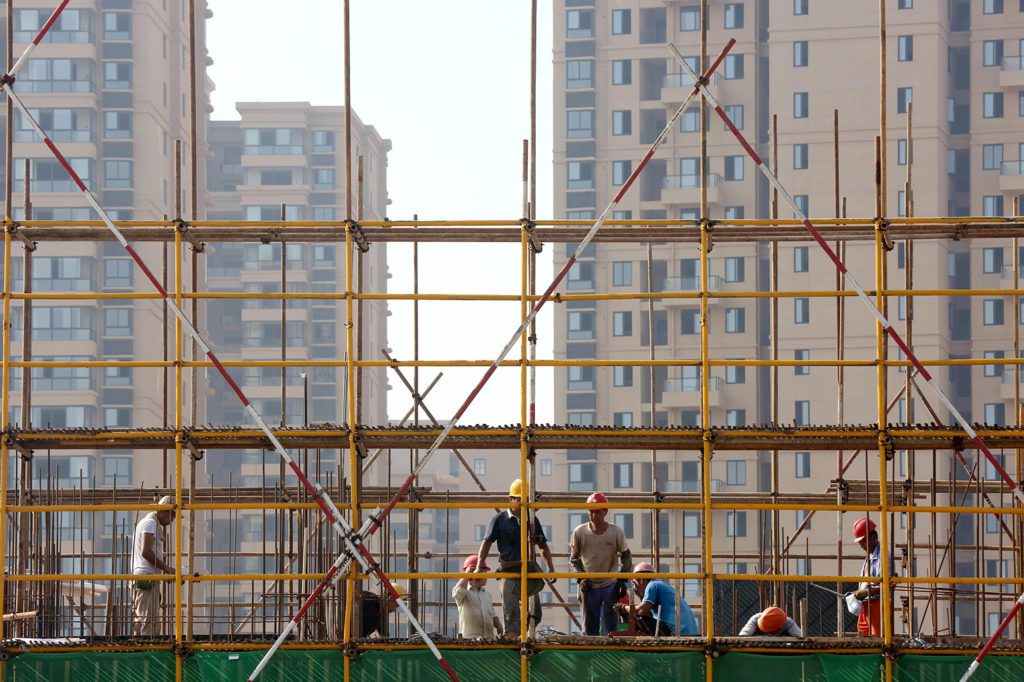
Construction workers on a residential building site in Huaian city, China. Credit: Imaginechina Limited / Alamy Stock Photo.

Cutting embodied CO2

The researchers say that on a global scale, the relatively limited attention paid to embodied carbon is preventing an accurate assessment of the building sector’s environmental impacts.

Dr Danielle Densley Tingley, an architectural engineer at the University of Sheffield who was not involved in the work, says these emissions are generally not given sufficient attention by nations setting climate targets. She tells Carbon Brief this is partly due to the way they are reported:

“They’re often lumped into ‘industrial emissions’. This focuses on the production of the materials – where there are only small efficiencies left to gain – but doesn’t really look at how the materials are then used, what is driving their consumption etc.”

She says better design and a focus on “deep retrofits” instead of demolition would help cut embodied emissions in buildings. Pomponi agrees that design lies at the heart of this issue:

“At the moment we are inefficient in the sense that we put more material than is actually needed into buildings … Firms tend to go with ‘rules of thumb’ or things that worked in the past rather than starting from scratch.”

Measures have been proposed to cut these emissions in some countries. The World Green Building Council has set a target of 40% less embodied carbon in all new buildings, infrastructure and renovations by 2030.

The authors of the new study estimate that, despite a focus on operational carbon emissions in China, the annual potential for reductions in the building sector could actually be larger for embodied than operational CO2.

Greenpeace East Asia’s Shen says that after years of intensive construction the situation is shifting and, going forward, the Chinese authorities are going to have to be “extremely careful” about what they build:

“The country has entered into a new stage of development in that blindly putting up more infrastructure is not only environmentally unsustainable but also will not keep the same investment return the country yielded in the last decades.”

Zhu, W. et al. (2020) Analysis of the embodied carbon dioxide in the building sector: A case of China, Journal of Cleaner Production, doi.org/10.1016/j.jclepro.2020.122438

***

‘Construction fever’ responsible for one fifth of China’s CO2 emissions

Josh Gabbatiss

Originally published under a CC license by Carbon Brief on 9 June 2020

Published under a CC license. You are welcome to reproduce unadapted material in full for non-commercial use, credited ‘Carbon Brief’ with a link to the article.
IEA: Coronavirus ‘accelerating closure’ of ageing fossil-fuelled power plants

IEA: Coronavirus ‘accelerating closure’ of ageing fossil-fuelled power plants

Josh Gabbatiss, Carbon Brief, 27 May 2020

***

This year will see the largest ever drop globally in both investment and consumer spending on energy as the coronavirus pandemic hits every major sector, according to the International Energy Agency (IEA).

The crisis is accelerating the shutdown of older fossil-fuelled power plants and refineries, with the agency saying it could provide an opportunity to push the global energy sector onto a “more resilient, secure and sustainable path”.

In the latest edition of the World Energy Investment report, which Carbon Brief has covered in previous years, the IEA has gone beyond its usual remit of reviewing annual trends. 

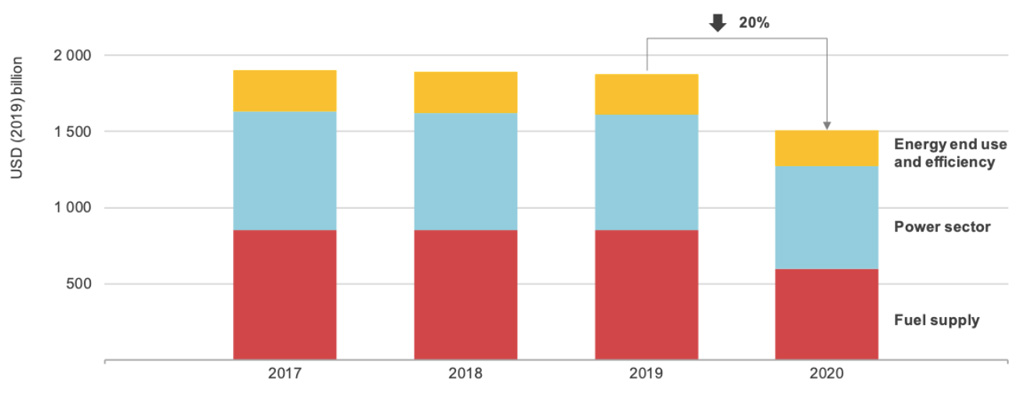
Its analysis looks ahead to the coming year and estimates the impact of this year’s economic turmoil on energy investment, which was expected to grow by around 2% prior to Covid-19. It is now expected to drop by 20%, or almost $400bn.

Meanwhile, as demand and prices collapse, consumer spending on oil is expected to drop by more than $1tn, prompting a “historic switch” as spending on electricity exceeds oil for the first time.

Here, Carbon Brief has picked out some key charts to illustrate the economic repercussions of the pandemic across the energy sector.

Energy investment will drop by a fifth

The “baseline expectation” for 2020 is a global recession resulting from widespread lockdowns, according to the IEA. Last month, the agency estimated this will also lead to CO2 emissions dropping by 8% this year in the largest decline ever recorded.

Based on the latest investment data and project information, announcements from companies and governments, interviews with industry figures and its own analysis, the IEA concludes such a recession will see energy investment drop by a fifth. This can be seen in the chart below.

Energy investment is set to fall by a fifth in 2020 due to the coronavirus pandemic. Fuel supply (red) includes all investments associated with the production and provision of fuels to consumers, consisting mainly of oil, gas and coal investments. Power sector (blue) includes spending on power-generation technologies, grids and storage. Energy end use and efficiency (yellow) includes the investment in efficiency improvements across all end-use sectors. Source: IEA

These estimates are based on assumptions about the duration of lockdowns and coronavirus recovery trajectories.

The IEA notes that “almost all” investment activity has been disrupted by these measures, as a result of restrictions to the movement of people, goods and equipment. 

However, the largest impacts are the result of declines in revenues due to falling demand and prices, with the clearest example coming from the oil sector. Analysis of daily data until mid-April suggests countries in full lockdown have seen energy demand drop by a quarter.

As a result, the agency also estimates that these factors, combined with a rise in cases of people not paying their energy bills, will see revenues going to both governments and industry fall by over $1tn this year.

Crisis ‘accelerating’ shift from low-efficiency technologies

Every year energy infrastructure is retired and replaced with new equipment. Typically, the replacement technologies will be cleaner and more efficient, although this is not always the case. 

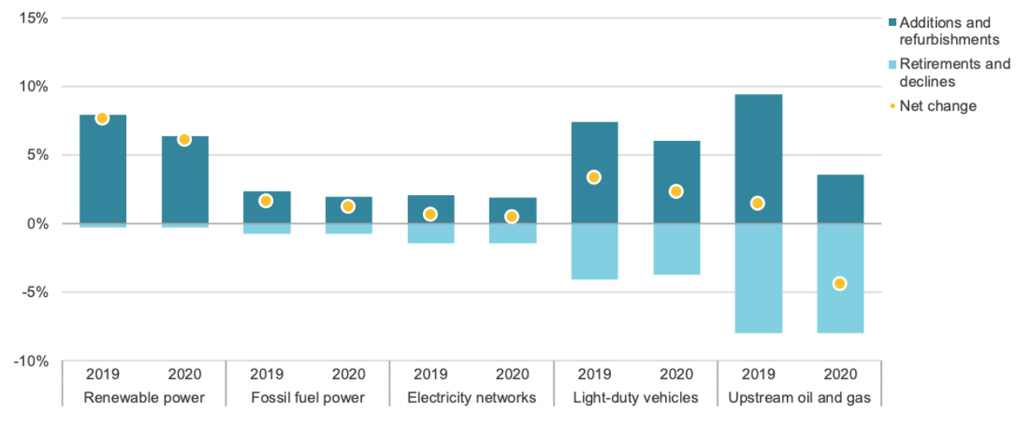
The coronavirus crisis is expected to have an impact on this rate of turnover and, indeed, it is already contributing to the retirement of some older power plants and facilities, as the chart below illustrates.

The Covid-19 crisis is hastening the retirement (light blue) of some older plants and facilities, but also impacting consumer spending on new and more efficient technologies (dark blue), with the potential for a net decrease (yellow dot) in upstream oil-and-gas facilities. Source: IEA.

The economic downturn and “surfeit of productive capacity in some areas” as overall demand plummets is already “accelerating” the closure and idling or inefficient technologies, including refineries and some coal-fired power plants.

However, the IEA warns that equally governments might respond to the pandemic by underinvesting in new technologies and remaining reliant on inefficient, older technology. The agency estimates efficiency investment could drop by 10-15% as spending is cut back.

The report warns that policymakers should keep these elements in mind and “combine economic recovery with energy and climate goals”. Dr Fatih Birol, executive director of the IEA, said in a statement that while the pandemic has brought lower emissions it has been “for all the wrong reasons”:

“The response of policymakers – and the extent to which energy and sustainability concerns are integrated into their recovery strategies – will be critical.”

Clean energy spending ‘relatively resilient’

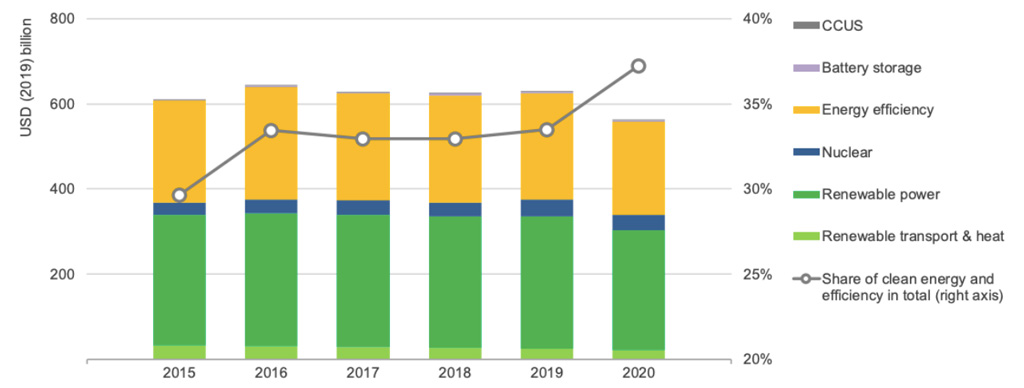
The share of global energy spending going towards clean energy, including renewables as well as nuclear and efficiency improvements, has been flat-lining at around one-third for the past few years.

As the chart below shows, this is likely to change this year as clean energy’s share edges closer to two-fifths of overall spending.

Breakdown of clean energy investment by sector in USD (left x-axis), with the % overall share (right x-axis) of spending indicated by a grey line. Source: IEA.

Clean energy investment is expected to remain “relatively resilient” this year, with spending on renewable projects falling by a comparatively small 10%. 

However, according to the IEA, the main reason for clean energy increasing its share is that fossil fuels are set to take such a “heavy hit”. In absolute terms, spending on these technologies is “far below levels” required to accelerate energy transitions.

The agency notes that investment trends have long been “poorly aligned” with the world’s needs and are still set to fall short of the future it has outlined in its benchmark Sustainable Development Scenario (SDS).

Last year’s edition of the World Energy Investment report concluded that investment in low-carbon energy sources must more than double by 2030 if the world is to meet its Paris Agreement targets.

While the slowdown in clean energy spending is less significant, it still “risks undermining the much-needed transition to more resilient and sustainable energy systems,” according to Birol.

Power sector hit hard

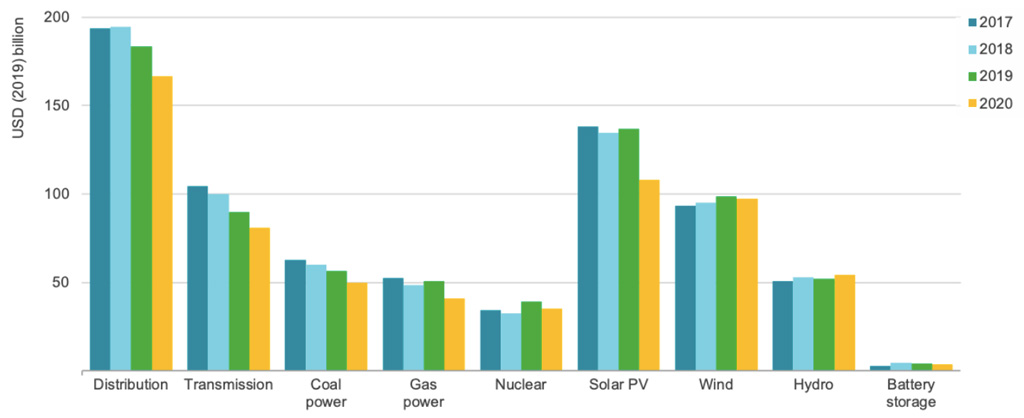
International power investment is set to drop by 10% as a result of the Covid-19 pandemic, according to the agency. 

Virtually every component of the sector is expected to see a decline in investment, with hydro the only exception, as the chart below demonstrates.

Global investment in the power sector by technology, with figures from the previous three years and estimates for 2020 (yellow). Source: IEA.

Increases in residential electricity demand around the world during lockdown are being “far outweighed” by reductions in commercial and industrial operations, the agency reports. A 9% decline in spending on electricity networks this year is also expected.

The IEA says some parts of power investment are more exposed, specifically fossil fuel-based generation. 

Meanwhile, higher shares of renewables are being dispatched due to low operating costs and priority access to networks. Nevertheless, renewables are still taking a hit, particularly distributed solar photovoltaics (PV) as households and companies cut back on spending.

Technologies with a longer lead time, notably offshore wind and hydropower, are expected to do better despite some delays.

Electricity spending pulls ahead of oil

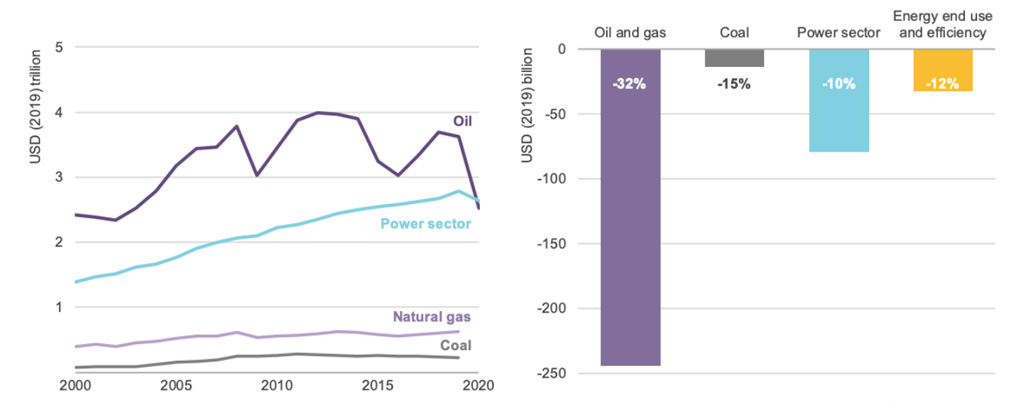
Oil accounts for most of the decline in revenues expected this year. Furthermore, in a “historic switch” consumer spending on electricity could exceed spending on oil for the first time ever. 

While power-sector revenues are expected to fall by $180bn, oil spending will likely drop by at least $1tn. This can be seen in the chart on the left below. Taken together, investment in oil and gas is expected to fall by almost a third in 2020. 

Both global end-use spending by consumers on energy (left) and estimated 2020 investment compared to 2019 show oil is expected to see the biggest decline in investment activity this year. Source: IEA.

The decline in aviation and road transport, which represent nearly 60% of oil demand, are responsible for this disproportionate decline.

Meanwhile, the impact on gas has so far been more moderate, but could fall further due to reduced demand in power and industry settings.

The report also highlights the global shale sector, which was already under pressure, as being particularly vulnerable. 

With investor confidence and access to capital in decline, the IEA predicts shale investment will halve in 2020 and notes the outlook for “highly leveraged shale players in the US” is now “bleak”.

Coal decline given a ‘floor’ by China

Coal is estimated to be the fuel hardest hit by the crisis after oil. Coal demand could drop by 8% this year, investment in coal supply is set to fall by a quarter and spending on new coal-fired plants is set to fall by around 11%.

However, any decline in coal’s fortunes may be curtailed by the recovery of demand for the fossil fuel in China. According to the IEA, investment activity there “may put a floor” under further reductions in coal-power investment this year.

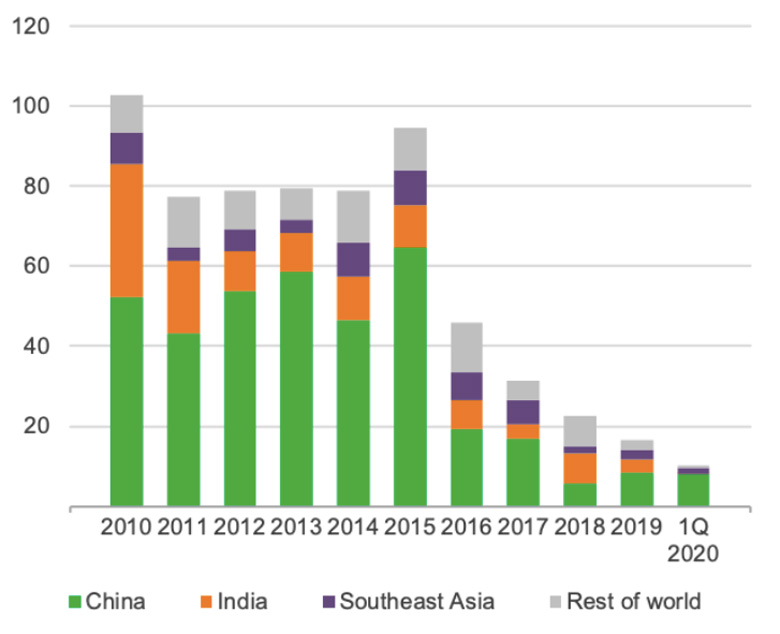
The nation’s focus on coal is illustrated in the chart below, which shows final investment decisions (FIDs) dropping to their lowest levels in a decade, but China providing virtually all of them in the year so far.

Coal-fired power generation capacity (GW) subject to a final investment decision (FID), with China coloured in green. Source: IEA.

Using data available so far, the IEA notes that approvals for new coal plants in the first quarter of 2020, were “running at twice the rate observed over 2019 as a whole”, primarily in China.

Electric vehicle sales rising as overall market contracts

Last year was a difficult time for the car industry, with total sales growth slowing in all major regions and turning negative in China and the US.

However, this “turbulent” period for the industry is “likely to appear mild” in comparison with 2020, according to the IEA. 

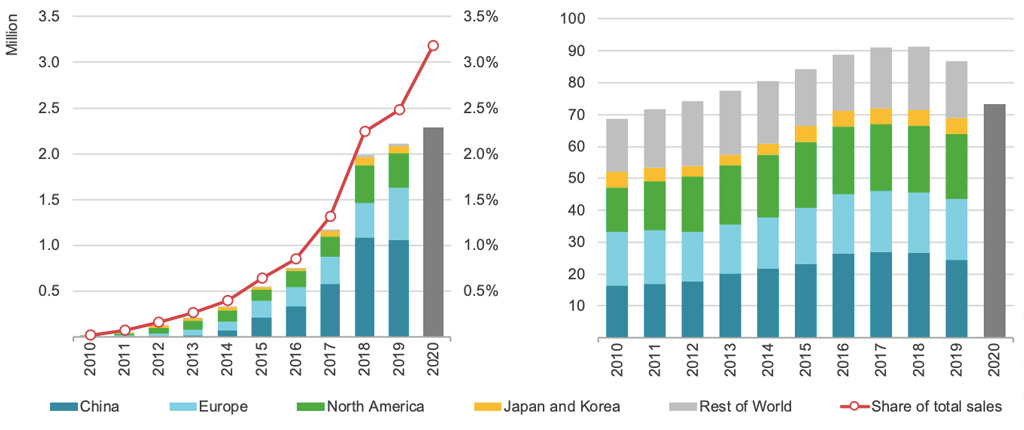
Lockdowns have already severely impacted sales and, across the year, the agency estimates a drop of around 15% – dramatic even compared to the 10% drop that followed the 2008 financial crisis. Negative trends in overall car sales can be seen in the right-hand chart below.

Global sales of electric passenger vehicles – cars, vans and small trucks – and market share, indicated by a red line (left chart). Total light-duty vehicle sales (right). Source: IEA.

However, even though electric vehicle sales followed wider patterns and stalled in 2019 largely due to declining Chinese purchases, their overall market share continued to climb. 

This can be seen in the chart on the left, which shows that electric cars are expected to go against the broader trend in 2020. The IEA estimates that owing to policy support, particularly in Europe, electric vehicle sales will increase this year, as will their share of the market (indicated by the red line).

Battery storage spending fell as prices dropped

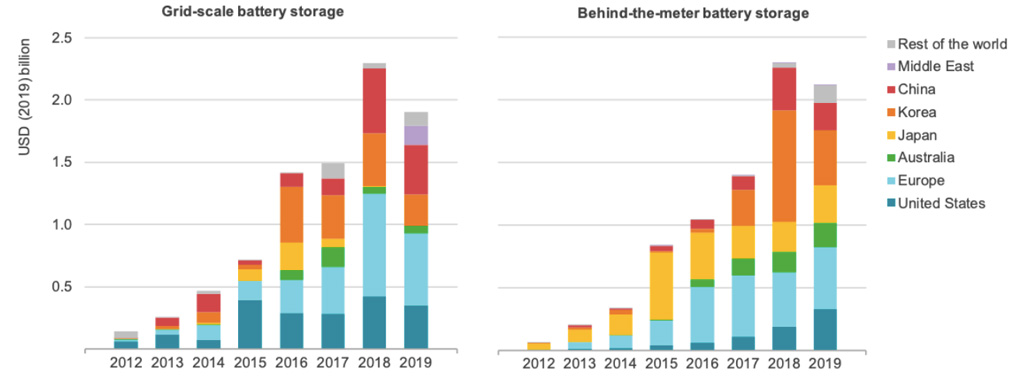
Investment in battery storage fell for the first time last year, as the chart below shows. Overall, spending on grid-scale and behind-the-meter batteries fell by 15%, with overall investment just above $4bn.

Investment in both grid-scale (left) and behind-the-meter battery storage (right). Source: IEA.

The IEA states this decline took place as costs for battery storage fell rapidly, a trend the agency attributes to maturing supply chains and markets, more efficient production and competition within the sector.

The report mentions fires at energy storage installations in South Korea and regulation uncertainty in China as some of the factors behind the decline in interest last year.

Declining behind-the-meter battery spending also reflects the distributed solar PV market, for which investment slowed last year in a trend expected to continue as consumer spending drops off due to coronavirus.

The agency notes that grid-scale battery investments are also expected to decline this year against the backdrop of a general decrease in power activity. 

However, it says this setback “is likely to be shortlived” due to the technology’s growing importance for system security and flexibility. 

***

IEA: Coronavirus ‘accelerating closure’ of ageing fossil-fuelled power plants

Josh Gabbatiss, Carbon Brief, 27 May 2020

Published under a CC license. Carbon Brief welcomes the reproduction of unadapted material in full for non-commercial use, credited ‘Carbon Brief’ with a link to the article.
Daily global CO2 emissions ‘cut to 2006 levels’ during height of coronavirus crisis

Daily global CO2 emissions ‘cut to 2006 levels’ during height of coronavirus crisis

Simon Evans, Carbon Brief, 19 May 2020

***

The amount of CO2 being released by human activity each day fell by as much as 17% during the height of the coronavirus crisis in early April, a new study shows.

This means daily emissions temporarily fell to levels last seen in 2006, the study says. In the first four months of the year, it estimates that global emissions from burning fossil fuels and cement production were cut by 1,048m tonnes of CO2 (MtCO2), or 8.6%, compared with 2019 levels.

The research projects a decline of up to 2,729MtCO2 (7.5%) in 2020 as a whole, depending on how the crisis plays out. It is the first to have been through the peer-review process and is broadly in line with an early estimate for China published by Carbon Brief in February, as well as separate global estimates published last month by Carbon Brief and the International Energy Agency.

Today’s study also marks the first-ever attempt to quantify CO2 emissions on a daily basis, for the world and for 69 individual countries, in close to real time. Until now, annual CO2 emissions data has typically been published months or even years later.

A publicly available daily estimate of global or national CO2 emissions would be “incredibly useful, particularly for motivating policy action and pressure”, another researcher tells Carbon Brief.

Coronavirus crisis

The ongoing coronavirus crisis has claimed the lives of hundreds of thousands of people around the world and seen the introduction of severe restrictions on movement in many countries.

These lockdowns have included “stay at home” orders, border closures and other measures that have had direct effects on the use of energy and, consequently, on the release of CO2 emissions.

As the crisis has unfolded, so too have attempts to quantify its impact on CO2 emissions. These efforts have been challenging, however, because real-time CO2 emissions data does not exist.

The annual emissions inventories that countries submit to the UN take years to compile – and even these are estimates rather than direct measurements.

Greenhouse gas emissions are estimated using a variety of methods, often based on “activity data”. This might be the number of miles being driven, the amount of electricity generated or even – in the case of nitrous oxide, which is used as a propellant  – via cream consumption.

Today’s study, published in Nature Climate Change, combines activity data for six sectors with a “confinement index” of lockdown measures in each country or region over time.

This allows for an estimate of changes in daily global CO2 emissions in January-April 2020, relative to the 100MtCO2 released on an average day in 2019.

During peak confinement in individual countries, daily CO2 emissions fell by 26% on average, the paper says. However, the size of this effect is reduced at a global level, because not all countries were under the most severe type of lockdown at the same time.

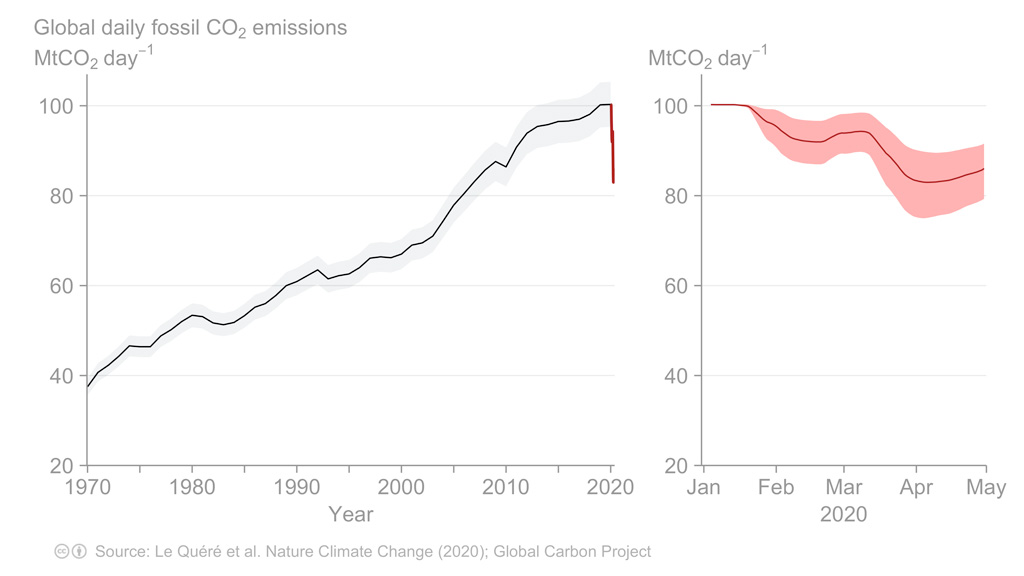
At the peak of the crisis in early April, regions responsible for 89% of daily CO2 emissions were under some form of lockdown, the paper says. Daily global CO2 emissions fell to 83MtCO2 (-17%, with a range of -11 to -25%) on 7 April, equivalent to levels last seen in 2006.

In a press release, lead author Prof Corinne Le Quéré, professor of climate change science at the University of East Anglia’s Tyndall Centre (who will be a panelist at Carbon Brief’s webinar on 21 May), says:

“Population confinement has led to drastic changes in energy use and CO2 emissions. These extreme decreases are likely to be temporary, however, as they do not reflect structural changes in the economic, transport, or energy systems.”

Daily data

In order to estimate daily global CO2 emissions, the researchers use a novel approach that combines sectoral activity data with a country-by-country confinement index.

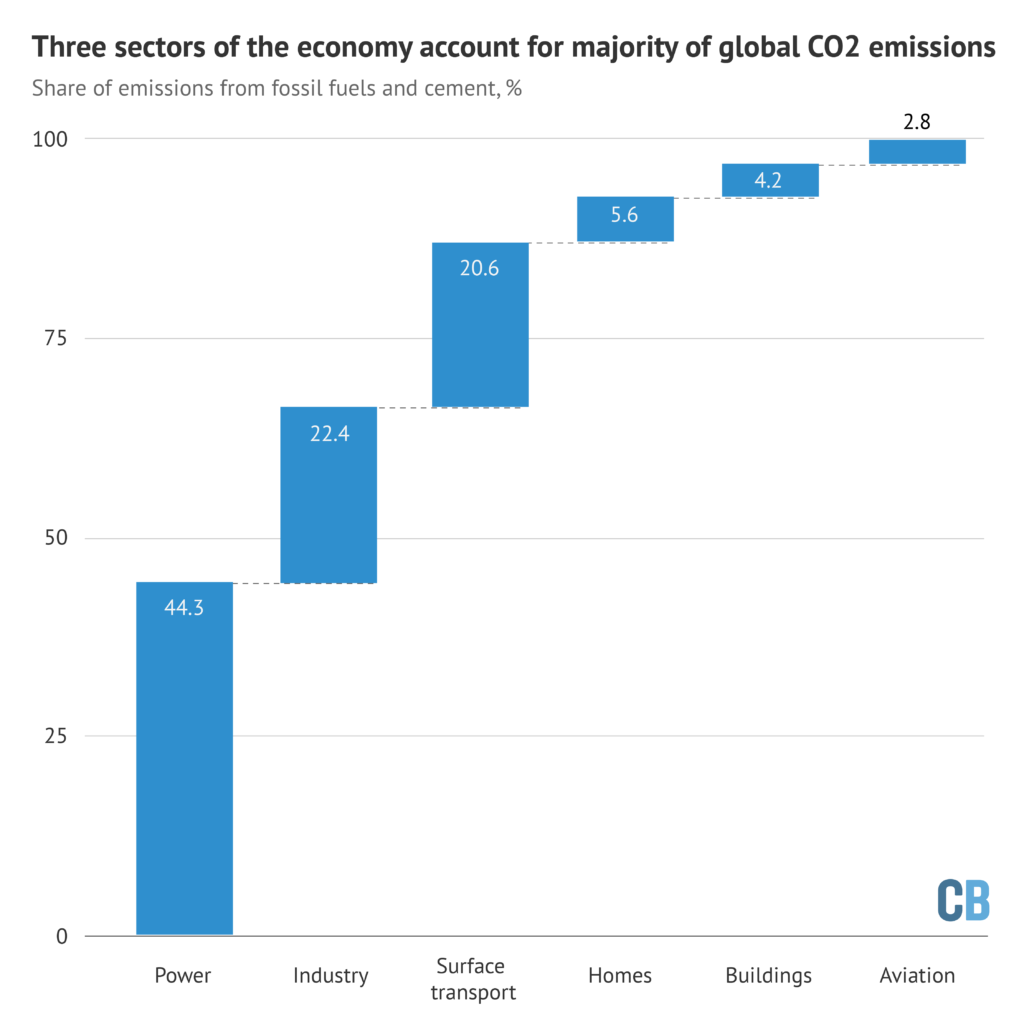
The paper looks at six sectors, shown in the chart below according to their share of global CO2 emissions from fossil fuels and cement. These are electricity and heat (44%); industry (22%); surface transport (20%); homes (6%); public buildings and commerce (4%); and aviation (3%).

Share of global CO2 emissions from fossil fuels and cement due to each of six sectors of the economy. Source: Le Queré et al. (2020). Chart by Carbon Brief.

Notably, this split highlights the limited potential for individual actions to radically reduce global emissions, in contrast to the societal choices that govern CO2 from electricity and industry.

The split in global CO2 emissions, shown above, is then broken down further for each of 69 countries, 50 US states and 30 Chinese provinces, which account for 97% of the global total. This gives industrial CO2 emissions in Italy, for example, on an average day in 2019.

The paper then uses 669 datasets, covering each of these sectors over time, and classified according to the level of confinement in place at each point. For example, this might be daily reports on mobility, traffic and congestion to measure “activity” for surface transport.

This daily data is then adjusted to remove effects unrelated to coronavirus, such as the mild northern hemisphere winter or the day of the week.

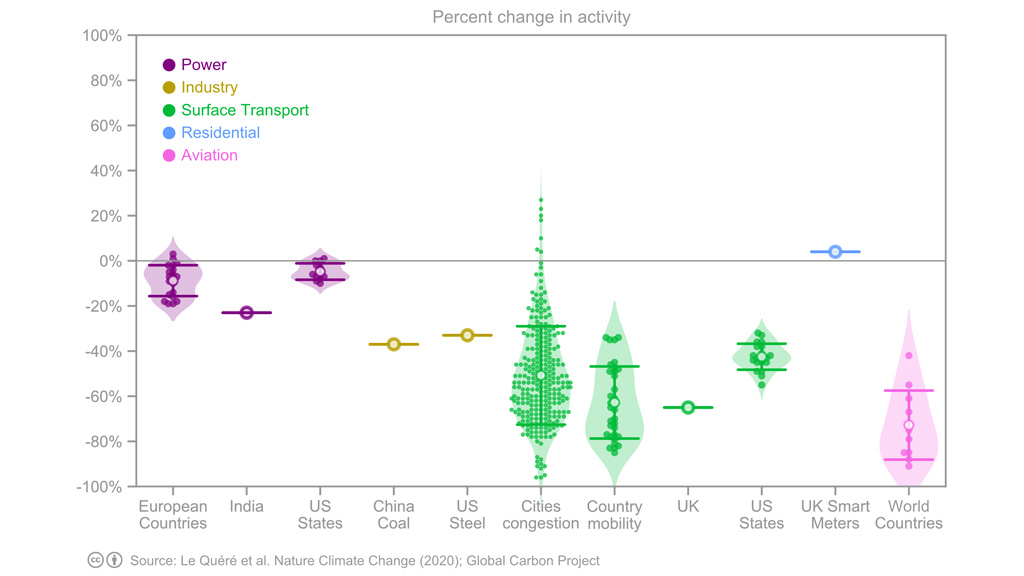
Under the highest level of confinement, surface transport “activity” fell by 50% on average, the paper finds. This is shown in green in the chart, below, where each dot represents a single data point, open circles show the average and the horizontal lines show the variability between datasets. The chart also shows changes in activity for electricity, industry, homes and aviation.

Change in sectoral “activity” under the highest level of coronavirus confinement, percent, relative to an average day in 2019. Each dot represents a single datapoint and open circles show the average. Reading from left to right, the chart shows activity changes in the power sector (purple), industry (yellow), surface transport (green), homes (blue) and aviation (pink). Source: Le Queré et al. (2020).

For electricity, the paper looks at total daily demand in Europe, the US and India, finding an average 15% reduction in demand under strict lockdown. In industry, the paper looks at daily coal use in China reported by Carbon Brief and weekly reports on steel production in the US.

For homes, the paper draws on figures from UK smart meters. And for aviation – the most strongly affected sector – it uses data on domestic and international departures around the world.

As the chart above shows, the analysis relies on relatively sparse information for industry, whereas activity levels in transport draw on a wider range of datasets.

Emissions estimates

The team then uses the average change in activity, for each sector and level of confinement, to build up an estimate of daily CO2 emissions around the world.

For example, on days when Turkey is under the strictest lockdown, the analysis assumes that its power-sector CO2 emissions would fall by 15% compared with the average in 2019 – and those from surface transport by 50%.

When Turkey shifts from “confinement index three”, the strictest controls, down to level two, its power-sector emissions would be 5% below usual levels and transport 40% lower. For each confinement level, the same percentage reductions are assumed to apply to all countries.

This approach means that the team only needed to know when each country, state or province changed its coronavirus lockdown from one “confinement level” to another, as well as the daily average level of CO2 emissions from each sector in 2019.

Putting all of these countries and lockdown levels together, the paper finds that the cut in daily global CO2 emissions peaked at -17% on 7 April, shown in the figure, below. Across the first four months of 2020, emissions fell by 1,048MtCO2 (8.6%), compared with 2019 levels.

Estimated daily global CO2 emissions from fossil fuels and cement, million tonnes (MtCO2 per day). The left panel shows emissions from 1970-2020 and the right panel shows the first four months of 2020. Source: Le Queré et al. (2020).

Within this global total, the largest impacts were in China, where emissions fell by an estimated 242MtCO2 in the first four months of the year, followed by the US (-207MtCO2), Europe (-123MtCO2) and India (-98MtCO2).

Dr Glen Peters, research director at Norwegian climate institute Cicero and one of the study authors, tells Carbon Brief that while the approach was designed around the current crisis, the team has gathered the “raw material” to make daily CO2 estimates on an ongoing basis. He says:

“We have discussed more ‘real-time’ estimates for sometime and there are many advantages. We are illustrating one advantage with our paper to see the consequences of particular policy interventions in near real time.”

But Peters notes that some of the daily data they used – the urban congestion index series from satnav maker TomTom, for example – is only being made publicly available during the current crisis and might be made private again in the future. He also asks whether daily data is truly needed, or whether weekly or even monthly estimates might be sufficient for scientists and policymakers.

Dr Hannah Ritchie, head of research at website Our World in Data and one of the reviewers of the new study, tells Carbon Brief:

“I think daily CO2 estimates would be incredibly useful, particularly for motivating policy action and pressure…Climate change already has the classic long-termism problem, but this is exacerbated by the fact that we get a figure on CO2 emissions published once a year, as a marker of how each country is doing.”

If daily CO2 estimates were publicly available for all countries, it would become possible to actively track progress, she says, adding: “You can have a counter on the news, or an app or dashboard on your phone – just like we do with other metrics like stock markets.”

Alternative analyses

Today’s research is not the first to analyse the CO2 impacts of the coronavirus crisis, although it is the first to have completed its passage through peer review.

Another paper, which is currently in review, also attempts to estimate daily global CO2 emissions in close to real time. This work finds the coronavirus crisis cut global emissions by -542MtCO2 below 2019 levels in the first quarter of 2020, similar to the -530MtCO2 figure from today’s paper.

In mid-February, Carbon Brief published an analysis showing that emissions in China were temporarily cut by 200MtCO2 (25%) over a four-week period, during the height of the restrictions. The new study finds that the cut in Chinese emissions peaked at 24%.

Today’s research also includes estimates of the emissions impact in 2020 as a whole, based on three scenarios for the length of lockdowns around the world. These entail CO2 emissions falling by between -4% and -8%, depending on how the crisis plays out. This range is consistent with estimates published in April byCarbon Brief (-6%) and the International Energy Agency (-8%).

***

Daily global CO2 emissions ‘cut to 2006 levels’ during height of coronavirus crisis

Simon Evans, Carbon Brief, 19 May 2020

Published under a CC license. You are welcome to reproduce unadapted material in full for non-commercial use, credited ‘Carbon Brief’ with a link to the article. 
Liu Wei (劉韡): “Sandwiches No. 13” (oil on canvas, 2015)

Born in Beijing in 1972, Liu Wei (劉韡) graduated from the National Academy of Fine Arts, Hangzhou in 1996.

Lehmann Maupin describes 劉韡‘s work:

Liu Wei “explores 21st century socio-political concepts such as the contradictions of contemporary society and the transformation of developing cities and the urban landscape.

“In many of his sculptural and installation works, he uses found materials that are re-contextualized to draw new meanings out of the materials from which they are made.”

Liu Wei’s works are exhibited and collected globally. Institutional and private collectors include Seoul’s Leeum, Samsung Museum of Art (리움 삼성미술관); the M+ Museum for Visual Culture in Hong Kong; and the Rubell Family Collection in Miami.

As you research Mr. Liu’s work, examine his entire œuvre. This work documents an eye and sense for the universal appeal of line, color, and composition.

Lehmann Maupin will highlight Liu Wei and his work during next week’s Art Basel in Basel 2018.

Look for the extraordinary “Library V-II” (books, wood, and iron) of 2015-2018.

Lehmann Maupin, by the way, with a gallery in both Manhattan and Hong Kong and a space in Seoul that is open by appointment, is doing superb work.

See: Liu Wei, Lehmann Maupin

Liu Wei: “Purple Air D1” (oil on canvas, 2008)

Liu Wei’s “Purple Air D1” (oil on canvas, 2008).

Liu Wei regenerates various segments of Beijing’s high-rise buildings into digitalized geometric structures of bright hues of pinks, yellows, blues, and greens.

The image was rendered digitally on a computer and then painted onto a larger canvas.

While modern and “digital,” Liu Wei connects with, while seeking to re-explore, more traditional landscape painting. Note the moon and the pine tree, traditional motifs.

Liu Wei, born in Beijing in 1972, is one of China’s leading contemporary artists. He lives and works in Beijing and is represented by Lehmann Maupin.

Rather than “subversively reference politics,” he often looks for inspiration in found objects and architectural constructions, expressing his views of a changing material landscape.

Liu Wei’s work is included in numerous collections such as the Astrup Fearnley Museet, Oslo; the Leeum, Samsung Museum of Art, Seoul; M+ Sigg Collection, Hong Kong; the Rubell Family Collection, Miami; and White Rabbit Gallery, Sydney.

Lehmann Maupin


See: 1) Phillips “20th Century & Contemporary Art & Design Evening Sale,” Lot 36, Hong Kong, 27 May 2018 2) Lehmann Maupin

#liuwei #art #artmarket #contemporaryart #arthistory #digitalart #tech #entrepreneur #collection #portfolio #architecture #design #realestatedevelopment #luxury #urban #landscape #china #beijing #shanghai #hongkong #seoul #tokyo #newyork #losangeles #miami #london #paris #berlin #oslo #zurich #vienna #milan #dubai

smart art | preventive conservation in China

Based on a nationwide investigation of the current state of preservation of museum objects in China, around 51% of the 35 million museum objects show different degrees of deterioration.

In China’s present situation, preventing damage to museum objects is much more cost-effective than allowing damage to happen and then treating it.

By 2013, the number of museums in China had increased to 3354 from 3055 in 2012, among which the number of private museum is 811. The number of museum visitors annually is 600 million.

Based on China’s national long-term outline plan for museum development (2011‒2020), we expect that by 2020 there will be one museum for every 250 000 people, compared to one per 400 000 in 2014, and that 20% of museums will be privately funded.

Owing to the impressive number of museums opened in the twentieth century, a large number of objects has been accumulated and has often been left in unsuitable environments, resulting in irreversible damage. Treatment of individual objects cannot meet the ever-increasing demand.

Rather than treatment after they show signs of degradation, looking for preventive conservation solutions becomes the most important museum function.

See:

Overview of preventive conservation and the museum environment in China” | Nan Feng, Research Center for Chinese Frontier Archaeology, Jilin University, Changchun, China, published online on 12 August 2016

#art #artcollections #smartart #smartluxury #urbanluxury #collectionsmanagement #China #museums #preventiveconservation #realestate #airpollution #climatechange #risk #riskmanagment