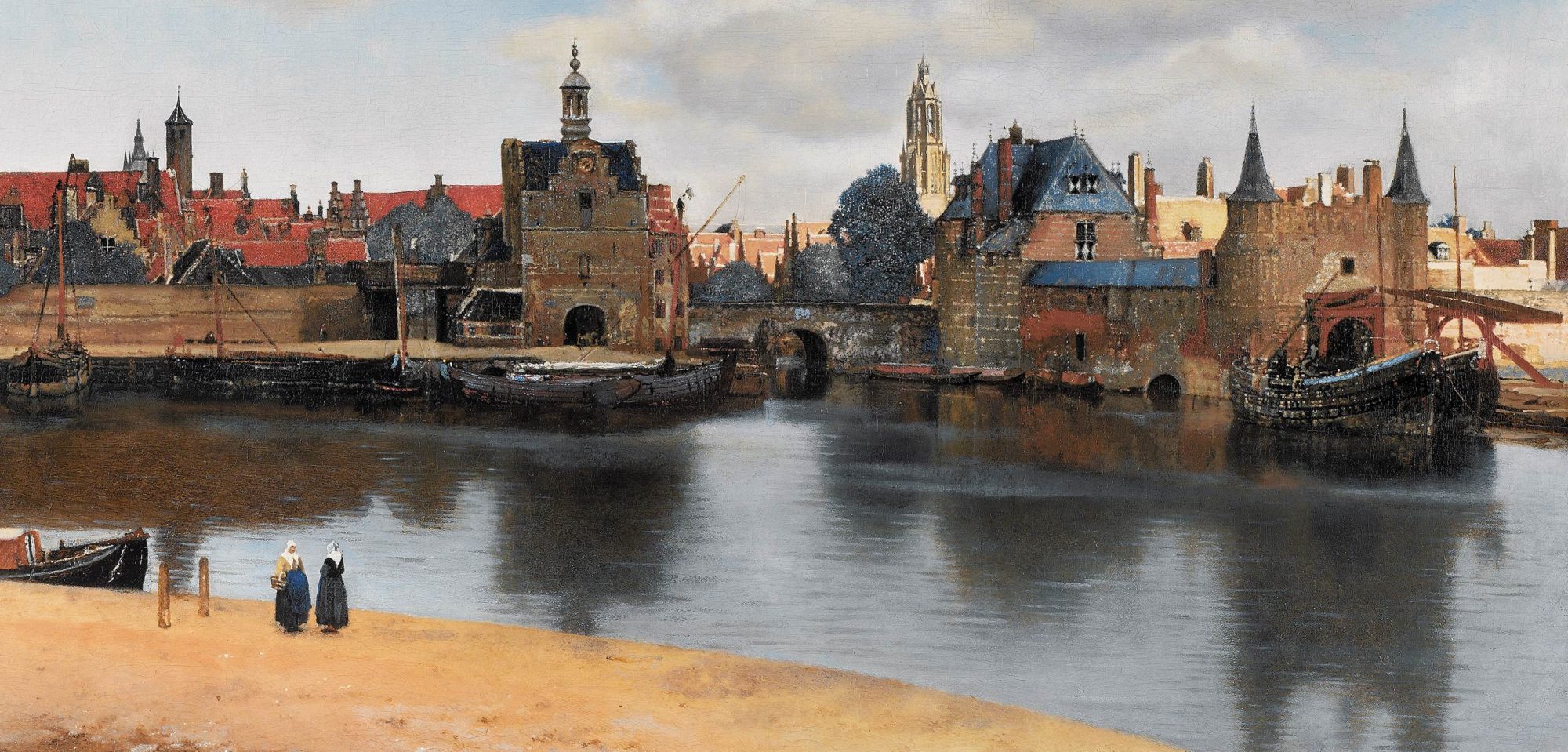
art, risk management, & “rolling disasters” as the new normal

There is worry in the insurance industry that “rolling disasters” may become the new normal, the effects of climate change that many scientists believe have resulted in dryer conditions in the west coast and more intense hurricanes in the east coast. “Climate change is a great concern to the art insurance industry, particularly because of the hurricanes we are seeing,” Quinn said. Both AXA and Chubb are active in promoting research in climate change, recognizing that catastrophic natural events may prove to be an annual occurrence.

Insurers are concerned especially over works of art in private homes.

Insurers in areas such as California may seek to limit their risks. The extent of the damage in regions of California affected by the recent wildfires, for instance, may well increase the cost and limit the availability of fine art insurance.

See:

As Natural Disasters Loom, What You Should Know About Insuring Your Art” | Daniel Grant, The Observer, 18 January 2018

#art #artmarket #collections #collectionsmanagement #insurance #fineartinsurance #climaterisk #risk #riskmanagement #fire #wildfire #hurricanes #flooding #risingseas #luxury #smartluxury #resilience #realestate #CO2 #H2O

M Moser Associates’ office in New York’s 1913-vintage Woolworth Building to be retrofit to Platinum WELL Building Standard

International architecture and design firm M Moser Associates is retrofitting and revitalizing their new office space on the 24th-floor of Manhattan’s Woolworth Building.

The Woolworth Building was built in 1913 and was, at the time, the tallest building in the world, engineered to maintain its own electricity, heat, and subway entrance, with windows that could, and still can, be opened when outdoor pollution levels are low.

While acknowledging challenges in retrofitting old office space, such as dealing with old electrical, old plumbing, and old HVAC, M Moser Associates points out that all buildings represent embodied energy and that embodied energy best be recognized and optimized.

As M Moser Associates revitalizes their office space on the 24th floor, the company will pursue both a Platinum Well Building Standard and USGBC LEED certification.

Initiated by Delos and the International WELL Building Institute, the WELL Building Standard is evidence-based, rating the quality of water, air, and light, and is geared toward occupant health, wellness, fitness, and productivity. The WELL Building Standard “marries best practices in design and construction with evidence-based medical and scientific research – harnessing the built environment as a vehicle to support human health and well-being.”

M Moser & Associates brings a similar focus on restructuring and re-engineering office space towards employee health, wellness, and productivity in all of its office spaces, including those in Hong Kong, London, San Francisco, and Guangzhou.

See:

Woolworth Building Office in New York Becomes a Retrofit Lab” | Alyssa Danigelis, Environmental Leader, 30 October 2017

Learning from Plans to Retrofit One of America’s Oldest Skyscrapers” | Adele Peters, Fastcodesign, 30 October 2017

Delos

#architecture #design #officespace #InternationalWELLBuildingInstitute #Delos #health #wellness #fitness #urbanliving #urbanluxury #luxury #realestate #commercialrealestate #CRE #builtenvironment #buildingtech #engineering #H2O #CO2 #HongKong #London #SanFrancisco #Guangzhou #resilience

SFMOMA・optimizing for sustainability was the fun part

After three years of construction under the direction of architectural firm Snøhetta and environmental design firm Atelier Ten, the expanded and high-performing San Francisco Museum of Modern Art (SFMOMA) opened to the public in May of 2016.

Doubling the size of the museum and tripling gallery space, the museum achieved and surpassed LEED gold, working towards maximum sustainability. Optimizing for maximum sustainability was the fun part.

Building on the the science of conservation, born out of the World-War-II-era movement of London artworks to slate caves in Wales, and on the San Francisco mandate that all new construction meet USGBC LEED gold criteria, the SFMOMA initiated a Sustainability Roundtable to research solutions that would work for the museum. Participants in the Sustainability Roundtable included museum staff and representatives from Atelier Ten, Snøhetta, Taylor Engineering, The Getty, Boston’s Museum of Fine Arts (MFA), the Indianapolis Museum of ARt, and Stanford University’s Anderson Collection.

Testing approaches and combinations of approaches iteratively, the group determined to optimize “seasonal set points” and customized every aspect of the structure’s design and systems including mechanical, lighting, water, and HVAC.

See:

Optimize, Optimize, Optimize: Museum Conservation in the LEED Era” | Lindsey Westbrook, freelance editor and writer specializing in art, architecture, and design; clients include SFMOMA, SFMOMA

SFMOMA reopens with Snøhetta extension that triples its gallery space” | Dan Howarth, Dezeen, 28 April 2016

#art #museums #artmarket #SFMOMA #SanFrancisco #architecture #design #resilience #builtenvironment #buildingtech #construction #tech #energy #conservation #luxury #smartluxury #urbanluxury #realestate #LEED #Snøhetta #AtelierTen #TaylorEngineering #Getty #MFABoston #IndianapolisMuseumofArt #AndersonCollection #CO2 #H2O #collectionsmanagement #contemporaryart #engineering

towards ‘net zero’ construction for all buildings

“Our vision is to create possibilities to make net zero construction in an efficient way, giving everyone the possibility to do so.”

So articulates Jonathan Karlsson, Founder and CEO (with degrees in theoretical and construction physics) of Innenco, an international company based in Malmö, Sweden that performs.

Reports Inhabitat,

“It starts with their active systems: pipes are integrated into the frame construction to utilize a building’s thermal mass. Adding heat pumps and chillers to the system allows Innenco to get four to six times greater efficiency in heating and cooling. At this point they’re able to reduce energy by 85%, so to cover the last 15% they install Innenco Quantum Solar panels. ‘This makes an investment in solar cells much lower than a traditional system, and we can get net zero for a really cost-efficient investment.'”

See:

This new energy concept from Sweden can make any building net zero” | Lacy Cooke, Inhabitat, 11 October 2017

Innenco

#Innenco #Malmö #Sweden #JonathanKarlsson #architecture #design #energy #netzero #CO2 #H2O #buildingtech #tech #physics #builtenvironment #resilience #thermalmass #efficiency #energyefficiency #costefficiency #performance #luxury #smartluxury #urbanluxury #urbanliving #realestate #finance #ROI #construction #Inhabitat