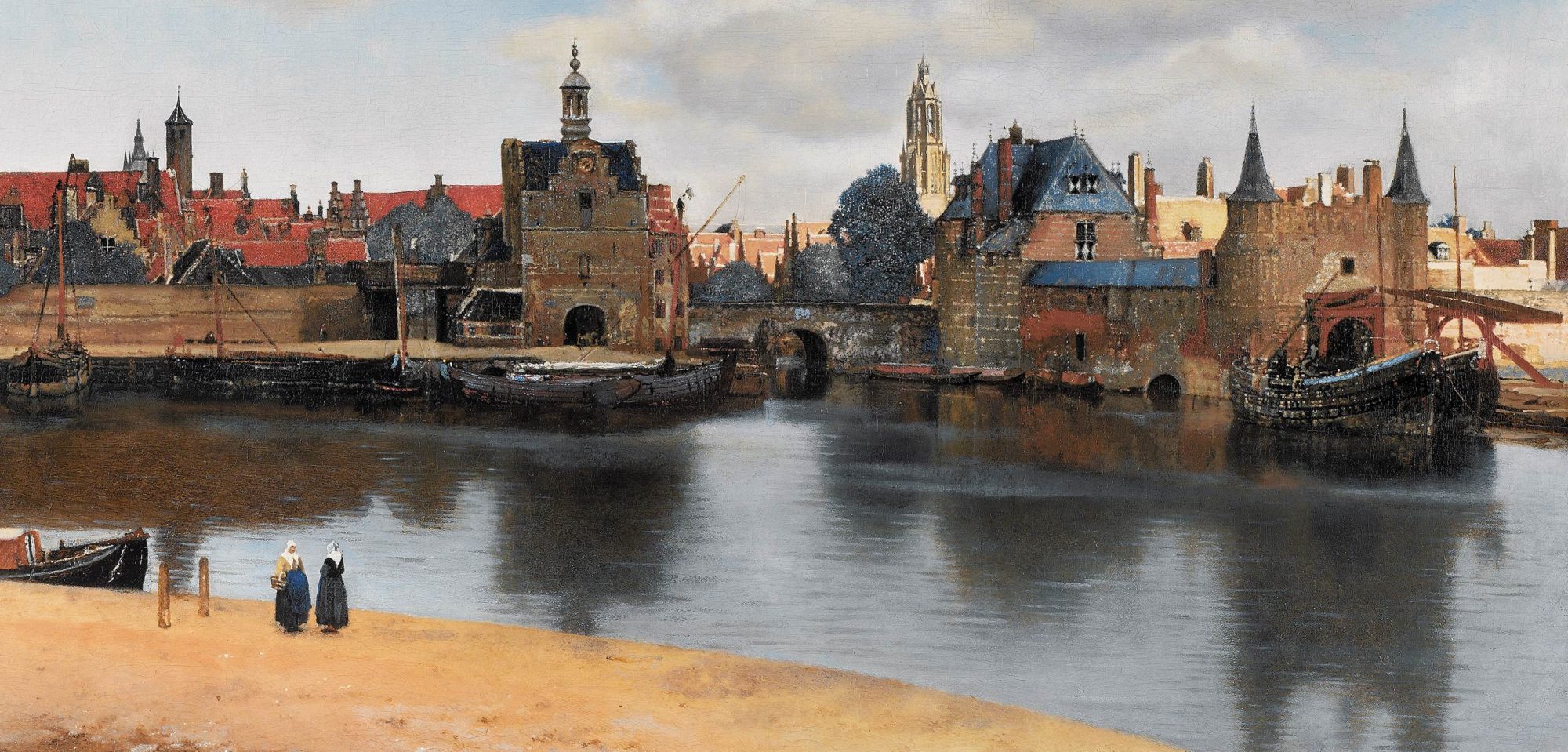
Museums preserve clues that can help scientists predict and analyze future pandemics

Pamela Soltis

Distinguished Professor and Curator, Florida Museum of Natural History, University of Florida

Joseph Cook

Professor of Biology and Curator, Division of Mammals, Museum of Southwestern Biology, University of New Mexico

Richard Yanagihara

Professor of Pediatrics and Principal Investigator, Pacific Center for Emerging Infectious Diseases Research, University of Hawaii

24 June 2020  8.17am EDT

***

In less than 20 years, communities around the globe have been hit by a string of major disease outbreaks: SARS, MERS, Ebola, Zika and now, COVID-19. Nearly all emerging infectious diseases in humans originate from microorganisms that are harbored by wildlife and subsequently “jump,” either directly or indirectly – for example, through mosquitoes or ticks – to humans.

One factor driving the increase in zoonotic disease outbreaks is that human activities – including population growth, migration and consumption of wild animals – are leading to increased encounters with wildlife. At the same time, genetic mutations in viruses and other microbes are creating new opportunities for disease emergence.

But humans remain largely ignorant of our planet’s biodiversity and its natural ecosystems. Only two million species – about 20% of all the estimated species on Earth – have even been named. In our view, this fundamental ignorance of nearly all aspects of biodiversity has resulted in an inefficient, poorly coordinated and minimally science-based response to key aspects of the COVID-19 pandemic.

We have diverse backgrounds in plant and mammal evolution and emerging infectious diseases. In a newly published commentary that we wrote with colleagues from across the U.S. and in six other countries, we identify a largely untapped resource for predicting future pandemics: natural history collections in museums around the world.

These collections preserve specimens of animals, plants and other organisms that illustrate the diversity of life on Earth. They are reservoirs of information and samples that can help scientists identify likely pathogen sources, hosts and transmission pathways. We believe that leveraging collections in this way will require more resources and more collaboration between biodiversity scientists and disease outbreak sleuths.

Sir David Attenborough explains how museum collections contribute to our understanding of the natural world.

Archives of life on Earth

Research shows that zoonotic diseases have increased due to human intrusion into animal habitats. In particular, destruction of tropical rain forests throughout the world has brought us face to face with microbes that occur naturally in wild animals and can cause disease in our own species.

Earth’s biodiversity is connected through a family tree. Viruses, bacteria and other microbes have evolved with their hosts for millions of years. As a result, a virus that resides in a wild animal host such as a bat without causing disease can be highly pathogenic when transmitted to humans. This is the case with zoonotic diseases.

Unfortunately, national responses to disease outbreaks are often based on very limited knowledge of the basic biology, or even the identity, of the pathogen and its wild host. As scientists, we believe that harnessing centuries of biological knowledge and resources from natural history collections can provide an informed road map to identify the origin and transmission of disease outbreaks.

These collections of animals, plants and fungi date back centuries and are the richest sources of information available about life on Earth. They are housed in museums ranging from the Smithsonian Institution to small colleges.

Together, the world’s natural history collections are estimated to contain more than three billion specimens, including preserved specimens of possible hosts of the coronaviruses that have led to SARS, MERS and COVID-19. They provide a powerful distribution map of our planet’s biodiversity over space and through time.

Preserved pathogens

How can researchers channel these collections toward disease discovery? Each specimen – say, a species of pitcher plant from Florida or a deer mouse from arid New Mexico – is catalogued with a scientific name, a collection date and the place where it was collected, and often with other relevant information. These records underpin scientists’ understanding of where host species and their associated pathogens are found and when they occurred there.

Connecting the site of a disease outbreak to potential pathogen hosts that occur in that area can help to pinpoint likely hosts, sources of pathogens, and pathways of transmission from hosts to humans and from one human to another. These natural history collections are connected worldwide through massive online databases, so a researcher anywhere in the world can find information on potential hosts in far-off regions.

But that’s just the beginning. A preserved specimen of a rodent, a bat or any other potential host animal in a collection also carries preserved pathogens, such as coronaviruses. This means that researchers can quickly survey microbes using specimens that were collected decades or more before for an entirely different purpose. They can use this information to quickly identify a pathogen, associate it with particular wild hosts, and then reconstruct the past distributions and evolution of disease-causing microbes and hosts across geographic space.

Many collections contain frozen samples of animal specimens stored in special low-temperature freezers. These materials can be quickly surveyed for microbes and possible human pathogens using genetic analysis. Scientists can compare DNA sequences of the pathogens found in animal specimens with the disease-causing agent to identify and track pathways of transmission.
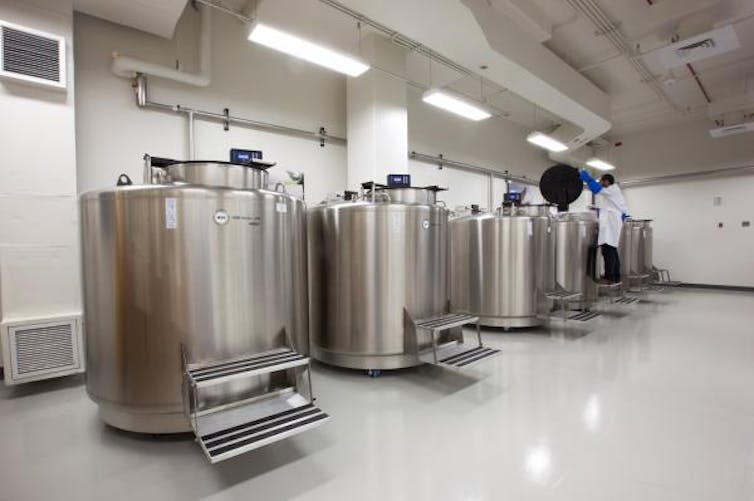
Nitrogen freezers for cryo-preserving specimens in the Smithsonian National Museum of Natural History’s Biorepository. Donald E. Hurlbert/SmithsonianCC BY-ND

For example, museum specimens of deer mice at the University of New Mexico were key to the rapid identification of a newly discovered species of hantavirus that caused 13 deaths in the southwest United States in 1993. Subsequent studies of preserved specimens have revealed many new species and variants of hantaviruses in other rodents, shrews, moles and, recently, bats worldwide.

Equipping museums and connecting scientists

Natural history collections have the potential to help revolutionize studies of epidemics and pandemics. But to do this, they will need more support.

Even though they play a foundational role in biology, collections are generally underfunded and understaffed. Many of them lack recent specimens or associated frozen tissues for genetic analyses. Many regions of our planet have been poorly sampled, especially the most biodiverse countries near the tropics.

To leverage biodiversity science for biomedical research and public health, museums will need more field sampling; new facilities to house collections, especially in biodiverse countries; and expanded databases for scientists who collect the samples, analyze DNA sequences and track transmission routes. These investments will require increased funding and innovations in biomedical and biodiversity sciences.

Another challenge is that natural history curators and pathobiologists who study the mechanisms of disease work in separate scientific communities and are only vaguely aware of each other’s resources, despite clear benefits for both basic and clinical research. We believe now is the time to reflect on how to leverage diverse resources and build stronger ties between natural history museums, pathobiologists and public health institutions. Collaboration will be key to our ability to predict, and perhaps forestall, future pandemics.

***

Pamela Soltis, Joseph Cook, Richard Yanagihara

Museums preserve clues that can help scientists predict and analyze future pandemics

first published in “The Conversation” under a Creative Commons license

Hans Hofman ・pictorial space & the hidden inherent laws of the picture surface.

Across time, space, and generations, the magic and spirit of Hans Hofmann, teacher to many, continues.

A composition of warm and vivid hues, geometric blocks of color, a surface that is rich in both visual and textural details, highlighting the materiality and thickness of the paint and the flatness of the canvas.

“Into Outer Space,” Hans Hofmann (oil on panel, 1957), at the Chrysler Museum of Art, Norfolk, VA (Gift of Walter P. Chrysler, Jr., 1971)

Action painter? Abstract expressionist?

“While critic Robert Coates first used the term Abstract Expressionism in his review of Hofmann’s 1946 solo exhibition at the Mortimer Brandt Gallery in New York, histories of postwar American art, have always focused on the youth, vitality, and uniquely American experiences of the generation of artists who matured in the 1940s.”

Lowery Stokes Sims, former Curator of 20th Century Art at The Metropolitan Museum of Art and organizer of the exhibition of 1999, “Hans Hofmann at the Metropolitan Museum of Art“.

Hofmann does not fit the narrative of such postwar histories. Born in 1880, Hofmann immigrated to the US from Germany in 1932 when in his fifties, developing a new style and creating a whole new body of work in his seventies and eighties.

During the course of his life Hofmann was a contemporary of and acquainted with Picasso, Braque, Matisse, and the Delaunays (both husband and wife). He had a lifelong interest in nature, science, music, poetry, and science. He crossed more significant barriers, national and aesthetic, than almost any other twentieth-century painter.

He was never a follower, nor an expressionist, fauvist, a cubist, or a surrealist.

I am often asked how I approach my work,” Hofmann wrote in 1962 on the importance of the act of painting.

“Let me confess: I hold my mind and my work free from any association foreign to the act of painting. I am thoroughly inspired and agitated by the actions themselves which the development of painting continuously requires….This seems simple but it is actually the fruit of long research”

H. Hofmann, “Hans Hofmann on Art,” in Art Journal, Vol. 22, Spring 1963, p. 18; quoted in Lot Essay, Hans Hofmann, “Auxerre,” Lot 36B, Christie’s, Post-War and Contemporary Art Evening Sale, New York, 13 May 2015

William Chapin Seitz, the first scholar to receive a PhD from Princeton University in the field of modern art (it took him more than a year to convince the Princeton art history graduate committee that the work of living artists was a topic worthy of graduate study) and formerly Associate Curator of Painting and Sculpture Exhibitions at New York’s Museum of Modern Art, organized the 1963 MoMA exhibition, “Hans Hofmann”.

Dr. Seitz observes,

“When one looks back at the years after 1945, when the “New American Painting” was taking form, it is apparent that one of its aesthetic determinants was the desire felt by many artists to incorporate in their work tendencies of style and feeling previously thought to be contradictory. Both the temper of Hofmann’s mind and his supranational development led him in this direction.”

It has been said that Hofmann is an “automatic” painter; he has also been called an “action painter” because of his direct enactment of emotional content. Yet his automatism has never been mere psychic catharsis, his activity is never purely physical, and his fury, like his delicate lyricism, is that of nature as well as himself. And even in the most passionate of his works the adjustment of formal relationships can be as precise as in the compositions of Mondrian or Malevich.”

Hofmann admired Mondrian for the purity of his abstract structure. He admired Kandinsky — whom he once called an “anti-plastic” painter — for his automatism and fluid color.

The architectural basis of his own painting derives from a study of Cezanne, and from cubism, yet (at least in his representational paintings).

By synthesizing such diverse materials, Hofmann developed his own metier: the unhampered autonomy of lines and planes; the elevation of color to a primary means; the maintenance of clear “intervals” between color planes; the preservation of physical gestures in pigment. He cast aside the dross of systematic perspective, tonal modeling, literature, and illusionism.”

Hans Hofmann with selected writings by the artist,” William Chapin Seitz, The Museum of Modern Art, 1963

Believing in the innate integrity of the pictorial space, Hofmann theorized the “push and pull” within a painting, describing how he used balance and contrast between colors and forms to create pictorial dynamism. Rejecting the traditional practice of creating depth through graduations of tone, Hofmann created space without denying the flatness of the picture’s surface.

Hofmann wrote in a late essay,

“Pictorial space is an aesthetically created space and is as such as real as nature. Its reality is based on the reality of the hidden inherent laws of the picture surface.”

H. Hoffman, quoted in S. Hunter, Hans Hofmann, New York, 1963, p. 44.

See:

Hans Hofmann with selected writings by the artist,” William Chapin Seitz, The Museum of Modern Art, 1963.

Hans Hofmann,” September 11 – December 1, 1963, The Museum of Modern Art

William C. Seitz: Defending the Modern,” The Museum of Modern Art

Hans Hofmann at the Metropolitan Museum of Art,” April 13 – October 17, 1999,

Hans Hofmann at the Metropolitan Museum of Art,” exhibition catalogue, Lowery Stokes Sims, 1999.

“Post-War and Contemporary Art Evening Sale,” Lot 36B, Hans Hofmann’s “Auxerre,” Christie’s, New York, 13 May 2015, Lot Essay

“Post-War and Contemporary Art Evening Sale,” Lot 20B, Hans Hofmann’s “Lava,” Christie’s, New York, 15 November 2017, Lot Essay

#art #artmarket #arthistory #history #hanshofmann #science #physics #pictorialspace #modernart #postwarart #contemporaryart #picasso #braque #delaunay #matisse #mondrian #malevich #jacksonpollock #actionpainting #abstractexpressionism #met #metropolitanmuseumofart #moma #museumofmodernart #christie’s #germany #newyork #sanfrancisco #london #berlin #oslo #vienna #milan #dubai #hongkong #seoul #tokyo #architecture #design #luxury #urban #urbanliving #realestatedevelopment

San Diego performs ・three San Diego scientists awarded the Breakthrough Prize for 2018

San Diego performs.

Three of the seven Breakthrough Prize awards (each of $3 million; founded in 2012 by tech entrepreneurs including Sergey Brin, the Google co-founder; Mark Zuckerberg, the Facebook co-founder; and Anne Wojcicki, co-founder of personal genomics company 23 and Me) for 2018 went to San Diego scientists in recognition of their research and achievements in life science, bio-medicine, and math. The prize for achievement in math is shared equally between UCSD and the University of Utah collaborators.

It is a short distance from downtown San Diego walk-ability and luxury, such as the Kohn-Pedersen-Fox-designed Pacific Gate, with interior design by Hirsch Bedner Associates (HBA), not only to the airport but also to the universities and research institutes.

See:

Sweet recognition — and major cash — for three San Diego scientists with Breakthrough Prize” | Bradley J. Fikes, The San Diego Union-Tribune, 3 December 2017

Breakthrough Prize

#realestate #luxury #smartluxury #urbanluxury #BreakthroughPrize #UCSD #SalkInstitute #science #tech #engineering #commercialrealestate #walkability #downtown #downtownofcourse #education #PacificGate #international #global #globalluxury #KPF #KohnPedersenFox #HBA #HirschBednerAssociates #architecture #design #interiordesign