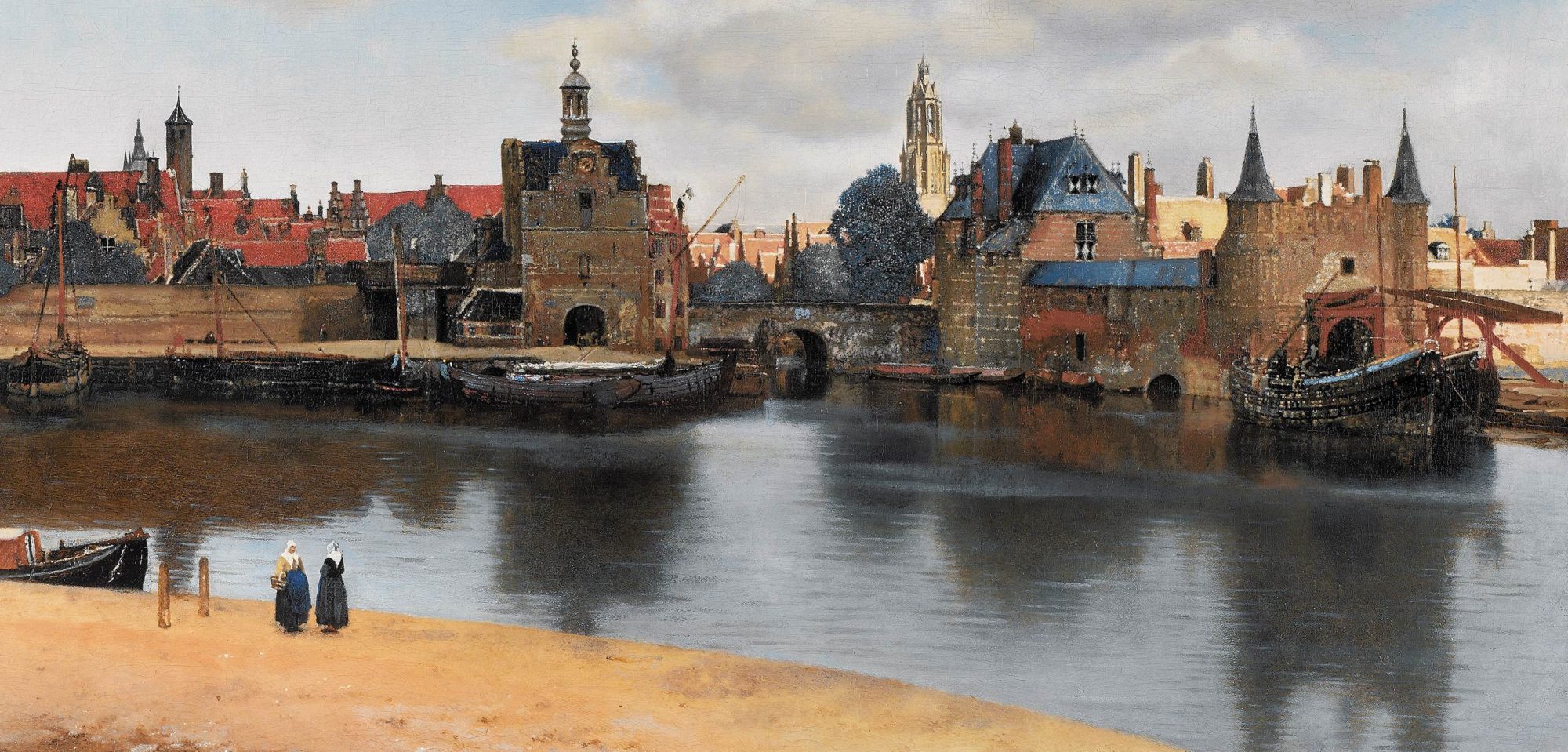
art storage & protection @ $1+ billion globally

The global art market generated sales of about $65 billion in 2016 according to the TEFAF Art Market Report 2017.

The growing, global network of facilities to store art now generates revenues of over $1 billion a year. Many of these spaces serve multiple objectives – including security, environmental protections, and trade: Sto

  • security
    • video surveillance
    • retinal scanning
  • space | collectors have too much to keep at home
  • protection
    • climate-controlled environments
    • fire-resistant walls
    • air-filtration
    • flood control
    • LEED and BREEAM building certifications
  • investment purchases
  • tax benefits
  • tax-suspended transport to and from galleries | as long as works of art return to storage no duty is payable, even if ownership of the art has changed
  • “1031 exchange” friendly
  • gallery inventory between shows and art fairs
  • storage of art taken by banks as collateral against loans
  • viewing rooms that can be rented on a more permanent basis | in-house, private sales and transfers of ownership
  • passport free access (freeports within airport perimeters)

Simon Hornby, the president of Crozier Fine Arts, estimates that 80% or even more of all the world’s art is in storage at any one time.

The art storage business has doubled in size in eight years and continues to grow.

“Until about ten years ago, Modern and contemporary art collectors were mainly made up of art enthusiasts and amateurs, they had a real passion, spending their money on what they liked; they collected in order to simply enjoy the work in their home environment. Today you have to work with an increasing number of art funds or speculators buying art for investment. Art buying has become accessible to a much larger audience than before and is considered an asset. The result of this is that more work sleeps in warehouses rather than hanging in collectors’ homes.”

Stephane Custot, Waddington Custot Gallery, London

“In the last year, I only physically saw one piece of art that I negotiated. Everything else was bought and sold via jpegs and remained in storage. It was all for investment.”

New York dealer and appraiser

In order to protect the assets, moreover, built environment investment is attempting to keep up with the evolution of demand, including security and environmental protections.

A state-of-the-art storage facility with “foreign trade zone” (FTZ) status (a freeport), ARCIS Fine Art & Collection Care, is under construction on Manhattan’s West 146th Street. Developed by Cayre Equities, the project has taken two years and over $40 million. Executive Director Tom Sapienza and Tom Lay, both formerly with Crozier Fine Arts, were recruited by art collector, real estate developer, and Crozier founder Ken Cayre to manage the project.

The five-story, 110,000 square foot is scheduled to open next month (July 2017).  ARCIS is Latin for “fortress”. The facility is designed and engineered to provide and enhance both environmental and security protections.

With the objective of constructing a museum-quality, sustainable, state-of-the-art secure building, Sapienza and Lay took crash courses in thermal dynamics and consulted with the professional services branch of the Van Gogh Museum in Amsterdam. Works of art will be scanned as they move through the building. State-of-the-art air filters are installed; air will change three to six times an hour.  LEED and BREEAM certifications are to be achieved for the building.

See:

TEFAF’s 2017 Art Market Report” | Marion Maneker, Art Market Monitor, 6 March 2017

TEFAF Art Market Report 2017” | Prof. Dr. Rachel A.J. Pownall, TEFAF Chair in Art Markets, The European Fine Art Foundation, March 2017

Where does all the art go after a fair?” | Georgina Adam, The Art Newspaper, 16 June 2017

Picasso Finds Possible Digs in Harlem $2.5 Billion Art Port” | Katya Kazakina, Bloomberg, 2 March 2017

Will New York Get Its Own Freeport for Art? ARCIS Plans a Tax Haven in Harlem” | Eileen Kinsella, Artnet, 2 March 2017

One of the World’s Greatest Art Collections Hides Behind This Fence” | Graham Bowley & Doreen Carvajal, The New York Times, 28 May 2016

About Foreign-Trade Zones and Contact Info” | U.S. Customs and Border Protection, U.S. Department of Homeland Security

#realestate #resilience #smartluxury #art #LEED #BREEAM #finance #investments #artcollections #artmarket #VanGoghMuseum #museums


climate risk, credit, bonds, & real estate: AAA is AAA? … or, move to high ground

For more than a century, rating companies have published information helping investors gauge the likelihood that companies and governments will be able to pay back the money they borrow. Investors use those ratings to decide which bonds to buy and gauge the risk of their portfolio. For most of that time, the determinants of creditworthiness were fairly constant, including revenue, debt levels and financial management. And municipal defaults are rare: Moody’s reports fewer than 100 defaults by municipal borrowers it rated between 1970 and 2014.

Climate change introduces a new risk, especially for coastal cities, as storms and floods increase in frequency and intensity, threatening to destroy property and push out residents. That, in turn, can reduce economic activity and tax revenue. Rising seas exacerbate those threats and pose new ones, as expensive property along the water becomes more costly to protect — and, in some cases, may get swallowed up by the ocean and disappear from the property-tax rolls entirely.

When asked by Bloomberg, none of the big three bond raters could cite an example of climate risk affecting the rating of a city’s bonds.

This is climate risk: risk to fundamental variables such as economic activity, property values, and tax bases caused by natural factors (such as storms and floods)  that may be exacerbated by our changing climate.

Climate risk has yet to be fully and sytematically incorporated into investigations into municipal creditworthiness.

Will your municipality will be be able to make timely and full payments on its then current debt load after a storm or flood, or repeated storms or floods, negatively influences economic activity?

What happens when the storms or floods are so severe that they “wipe out the taxation ability? I think this is a real risk” observes Bob Buhr, a former vice president at Moody’s who recently retired as a director at Societe Generale SA.

Predictions are imperfect, especially about the future; no one, no algorithm, no model can perfectly predict the future. The pace of climate change remains uncertain. What climate change, and concomitant effects on communities, community tax revenues, and the likelihood of any community being able to pay back bonds “is not a simple calculation.”

To date, the major ratings agencies are not asking questions about the expected effect of climate change on the economic activity and future tax revenues of US municipalities that look to “cheap money” (municipal bonds) to finance government.

Last September, when Hilton Head Island in South Carolina issued bonds that mature over 20 years, Moody’s gave the debt a triple-A rating. In January 2016, all three major bond companies gave triple-A ratings to long-term bonds issued by the city of Virginia Beach, which the U.S. Navy has said faces severe threats from climate change.

Investors, including 117 investors with $19 trillion in assets, say it would be prudent to include “systematic and transparent consideration” of environmental and other factors in order to identify systemic ESG risks in debt capital markets.

In other words, bond buyers should be warned. If storms and floods decrease property values and tax revenues while increasing spending on mitigating infrastructure such as sea walls, storm drains and flood-resistant buildings, pay back to bond buyers may be impacted.

Property owners – both residential and commercial – might take note.

Should your municipality meet a storm or flood that significantly impacts economic activity and the ability to collect tax revenues, it might be stressed and its ability to make scheduled payments on its municipal debt obligations might be impacted.

This will influence the municipality’s credit. If the credit is downgraded, the municipality will have to pay greater interest on its debt. To pay higher interest, it will have to collect more tax revenues. That means greater economic activity and/or higher taxes.

And/or, the municipality might have to reduce services. Municipal services include physical infrastructure (such as roads, bridges, water) and civic benefits such as fire departments and schools.

If such services are reduced, how prepared are you in your private capacity to initiate efforts and implement necessary steps towards the robust resilience (basically the ability to bounce back after a shock  or multiple shocks to the system) and operability of your real estate holdings (residential, commercial, …)?

Do you have the means (financial, intellectual, technical, etc.) and the time to “do it yourself” (e.g., water, energy, transportation)? How do you use your real estate holdings? How long do you expect to own them? What are your expectations of resale value?

Moving to high ground might help manage the risk.

Food for thought.

See:

Rising Seas May Wipe Out These Jersey Towns, But They’re Still Rated AAA” | Christopher Flavelle, Bloomberg, 25 May 2017

Credit ratings agencies embrace more systemic consideration of ESG” | PRI, Principles for Responsible Investment, 26 May 2016

#climatechange #climaterisk #creditrisk #risk #finance #municipalfinance #bonds #credit #realestate #resilience #luxury #smartluxury #urbanluxury

Amazon expanding into physical stores, agrees to acquire Whole Foods Market

Amazon announced today that it has agreed to purchase Whole Foods Market.

Amazon (NASDAQ:AMZN) and Whole Foods Market, Inc. (NASDAQ:WFM) today announced that they have entered into a definitive merger agreement under which Amazon will acquire Whole Foods Market for $42 per share in an all-cash transaction valued at approximately $13.7 billion, including Whole Foods Market’s net debt.

Amazon to Acquire Whole Foods Market, BusinessWire, 16 June 2017

The New York Times reports that Amazon wishes to expand beyond online retail into physical stores.

The company is experimenting with physical stores. The Atlantic reports that “Amazon needs food and urban real estate.” The company has opened a small chain of book stores across the country. In Seattle, Amazon has opened two drive-through grocery pickup locations;  customers order their items online.

With Whole Foods, Amazon will acquire more than 460 stores in the United States, Canada and Britain.

“’The Whole Foods acquisition provides them more physical locations. They’re going to be within an hour or 30 minutes of as many people as possible.’”

Mikey Vu, partner (retail), Bain & Company

Whole Foods’ urban and suburban locations are extremely valuable for Amazon’s delivery business.

“’Amazon did not just buy Whole Foods grocery stores. It bought 431 upper-income, prime-location distribution nodes for everything it does.’”

Dennis Berman, financial editor, the Wall Street Journal, via Twitter

Whole Foods, The Atlantic reports, “needs help.” While Whole Food Market sales were approximately $16 billion in the 2016 fiscal year and while the United States grocery industry produces approximately $700 to $800 billion in annual sales, the grocery business is low-margin. Whole Foods revenue growth has fallen every year since 2012. Whole Foods investors have been encouraging the company to sell itself to a larger grocer like Kroger.

Under the terms of the proposed deal, Amazon would pay $42 a share for Whole Foods, a 27 percent premium to Thursday’s closing price.

Completion of the transaction is subject to approval by Whole Foods Market’s shareholders, regulatory approvals and other customary closing conditions. The parties expect to close the transaction during the second half of 2017.

Amazon to Acquire Whole Foods Market, BusinessWire, 16 June 2017

Whole Foods was founded in 1978 in Austin, Texas.

See:

Amazon to Buy Whole Foods in $13.4 Billion Deal” | Michael J. de la Merced & Nick Wingfield, The New York Times, 16 June 2017

Amazon to Acquire Whole Foods Market” | BusinessWire, 16 June 2017

Why Amazon Bought Whole Foods” | Derek Thompson, The Atlantic, 16 June 2017

#Amazon #WholeFoods #WholeFoodsMarket #organic #retail #groceries #grocery #food #smartluxury #urbanluxury #urbanliving #realestate #resilience

real estate investment & climate change futures ・ the next dry neighborhood

If there’s anything more complicated than the global forces of thermal expansion, ice sheet melt and ocean circulation that contribute to worldwide sea-level rise, it might be the forces of real estate speculation.

Real estate investment may no longer be just about the next hot neighborhood, it may also now be about the next dry neighborhood.

“‘That’s it, it’s that simple. To be on the beach and to be on the water costs a lot more money, and the cheaper parts of town were furthest from the beach — but it just turns out that the cheapest parts of town farthest from the beach are the highest elevation, and now they’re worth a lot more than they used to be.'”

Jesse M. Keenan, Harvard Graduate School of Design

“‘The real issue is: Are people making real estate decisions based on climate change futures, rather than sort of normal speculation?'” observes Hugh Gladwin, an anthropologist at Florida International University in Miami. Gladwin’s specialty is using geographic information system mapping to understand large, diverse urban settings.

Jesse M. Keenan is a lawyer who teaches climate change adaptation at Harvard University’s Graduate School of Design. Mr. Keenan formerly served as the co-founder and research director of Columbia University’s Center for Urban Real Estate (CURE). His family roots are in Miami and he owns a house and has an office and parking space in Miami. He thinks people are making real estate decisions based on climate change futures.

Using survey data, Mr. Keenan is beginning to see see evidence that middle-income people are leaving Miami Beach and other places with nuisance flooding. Such flooding makes  it difficult to get around at high tides or insure a car.

Mr. Keenan observes, “‘Everybody I know that is a small owner of real estate that isn’t within the billionaire class — average middle-class, upper-middle-class Miamians who have real estate on the beach — is in the process of selling their properties and moving to the mainland.'”

Sea-level rise is exacerbating the effects of coastal flooding in South Florida. A 2016 University of Miami study finds that coastal flooding is accelerating. The coastal flooding is coinciding with an accelerated rate of sea-level rise in South Florida. The average rate of sea-level rise jumped from an increase of 3 millimeters a year before 2006 to an increase of 9 millimeters a year on average after 2006. Over the course of one decade, from 2006 to 2016, that’s about 3.5 inches of sea-level rise.

Sam Purkis, a marine geologist at the University of Miami, observes,

“‘What will happen, more than likely, is that you’ll have one big hurricane, and you’ll get a big inundation into the city. And that will serve to rot out the infrastructure — the sewer lines, the electricity, the telecoms. Everything that’s under the road. That becomes very costly to keep replacing every time this happens.'”

“‘That’s it, it’s that simple,'” says Harvard’s Jesse Keenan.

“‘To be on the beach and to be on the water costs a lot more money, and the cheaper parts of town were furthest from the beach — but it just turns out that the cheapest parts of town farthest from the beach are the highest elevation, and now they’re worth a lot more than they used to be.'”

Local governments are considering  what sea-level rise means for all those mortgage holders who pay taxes.

Coral Gables released an analysis of how it would pay for infrastructure investment in the face of a shrinking tax base if people leave.

“We’re concerned about it, we’re planning for it, we’re spending money on vulnerability studies trying to know what our vulnerabilities are in terms of our essential infrastructure, and planning to build up and save our communities as long as we can,” Jim Cason, Mayor of Coral Gables, said.

See:

High Ground Is Becoming Hot Property As Sea Level Rises” | Erika Bolstad, ClimateWire, 1 May 2017, re-printed from ClimateWire by Scientific American with permission from E&E News

Hugh Gladwin, Steven J. Green School of International & Public Affairs, Florida International University

Jesse M. Keenan, Harvard University Graduate School of Design

Center for Urban Real Estate, Columbia University GSAPP

Sam Purkis, Professor & Chair, Department of Marine Geosciences, Rosenstiel School of Marine & Atmospheric Science, University of Miami

#realestate #realestatedevelopment #realestatespeculation #art  #ArtBaselMiamiBeach #Miami #MiamiBeach #climatechange #sealevelrise #resilience #Harvard #Columbia #FloridaInternationalUniversity #UniversityofMiami


climate change as opportunity・developing economic value through investments in resilience

From a Dutch mind-set, climate change is neither a hypothetical , nor a drag on the economy, nor an ideology. For the people of the Netherlands climate change is an opportunity – to let water in, where possible, to live with water rather than struggle to defeat it – with added economic value developed through investing in resilience.

People in the Netherlands believe that the places with the most people and the most to lose economically should get the most protection.

To the Dutch, what’s truly incomprehensible is New York after Hurricane Sandy, where too little has been done to prepare for the next disaster.

The idea that a global economic hub like Lower Manhattan flooded during Hurricane Sandy, costing the public billions of dollars, yet still has so few protections, dumbfounds climate experts in the Netherlands.

See:

The Dutch Have Solutions to Rising Seas. The World is Watching” | Michael Kimmelman, The New York Times, 15 June 2017

#climatechange #realestate #resilience #Rotterdam #investments #economicvalue

Blackstone Real Estate is optimizing art as a targeted value-add initiative for its NY real estate portfolio

Blackstone Real Estate is optimizing art as a targeted value-add initiative for its real estate portfolio throughout New York City.

Blackstone is initiating a partnership Hunter College to recognize talented emerging artists while concomitantly giving visitors to its building portfolio throughout the city access to unique works of art.

Last week Jon Gray, Global Head of Real Estate at Blackstone, introduced a new exhibition featuring artwork by students currently enrolled in the Hunter College Master of Fine Arts program: Talia Levitt, Madhini Nirmal, Leonard Reibstein, and Andy Van Dinh.

These works of art, both paintings and large-scale works on paper, will be displayed for a year in the lobby of 5 Bryant Park.

Blackstone is the world’s largest real estate private equity firm with $102 billion of investor capital and $200 billion of gross assets under management.

Blackstone seeks to acquire high quality investments at discounts to replacement cost. The company improves the properties through hands-on management and targeted value-add initiatives.

The breadth of Blackstone’s real estate portfolio provides valuable real-time proprietary market data. Blackstone believes this information enables the company to identify mispriced and/or out-of-favor asset classes more rapidly than its competitors.

Blackstone real estate also operates one of the leading real estate finance platforms, including management of the publicly traded Blackstone Mortgage Trust (NYSE:BXMT).

See:

Blackstone Partners with Hunter College for Student Art Exhibition at 5 Bryant Park” | Blackstone Blog, 12 June 2017

Blackstone Real Estate

#art #realestate #finance #risk #collectionsmanagement #portfoliomanagement #HunterCollege #HunterCollegeMFA #NewYork #Manhattan #Blackstone #privateequity #riskanalysis #risk management #collections


Apple issues second green bond, a $1 billion bond to finance renewable energy & closed-loop supply chain

Yesterday Apple issued its second “green bond”, a $1 billion bond dedicated to financing renewable energy, energy efficiency at Apple facilities and throughout its supply change, to close its supply chain loop, and procure safer materials for its products. 

The bond offering includes a specific focus on helping Apple meet a goal of

  • developing a closed-loop supply chain and
  • using only renewable resources or recycled material in the manufacture of its products.

The bond is to mature in 2027 and will yield 95 to 100 basis points more than Treasuries. Bank of America Corp., Goldman Sachs Group Inc. and JPMorgan Chase & Co. arranged the sale.

Investors are seeking lower-carbon investments. Demand for green bonds is growing significantly.

According to the Climate Bonds Initiative, in 2016 $81 billion of green bonds were issued. This is double the number of green bonds that were issued in 2015.

See:

Apple Issues a Second Green Bond to Finance Clean Energy” | Alex Webb, Bloomberg, 13 June 2017

Apple issues $1 billion green bond after Trump’s Paris climate exit” | by Valerie Volcovici, Reuters, 13 June 2017

Climate Bonds Initiative | “Climate Bonds Initiative is an international, investor-focused not-for-profit. We’re the only organisation working solely on mobilising the $100 trillion bond market for climate change solutions.”

#Apple #finance #greenbond #GoldmanSachs #BankofAmerica #JPMorganChase #renewableenergy #cleanenergy #investments #bondmarket #climatechange #climatechangesolutions


New York’s Metropolitan Museum of Art changes leadership structure

New York’s Metropolitan Museum of Art announced yesterday that Daniel H. Weiss, who has served as president and chief operating officer of the Met since 2015,  will now serve as president and chief executive.

This appointment, decided by the Board of Trustees, represents an organizational shift for the museum.  In prior years the director has served as chief executive.

As both president and chief executive, Dr. Weiss will lead the administrative operation of the museum and will have the “worry about day-to-day matters like security, restaurants and maintenance.”

The next director will oversee the museum’s “core mission functions” –  curatorial focus, acquisitions, exhibitions, publishing program, conservation efforts, and library – and will report to Dr. Weiss, the chief executive.

Both chief executive and director will serve on the Board of Trustees. They will establish the museum’s priorities together.

See:

In an organizational shift, Met president Daniel Weiss takes over as chief executive” | Pac Pobric, The Art Newspaper, 13 June 2017

Met Museum Changes Leadership Structure” | Robin Pogrebin, The New York Times, 13 June 2017

#MetropolitanMuseumofArt #theMet #art #museums #DanielHWeiss #collections #NewYork #realestate


Andrew Goldstein on Great Art @ Art Basel

Andrew Goldstein, Editor-in-Chief of Artnet and formerly of Artspace, pronounces on “the ten best artworks at Art Basel 2017.”

Included are Francis Bacon’s painting “Study from the Human Body – Figure in Movement” (1982), offered by the Marlborough Gallery, New York, for $25 million and  Christopher Wool’s sculpture”Untitled” (2014), offered by Luhring Augustine, New York, for $2.2 million.

Mr. Goldstein observes that Bacon’s “Study from the Human Body – Figure in Movement,” obtained by the gallery directly from Francis Bacon just before he passed away,  features

“marquee elements of a major Bacon—the spooky transparent box (evoked memorably in the new “Twin Peaks”), vigorous coloration, and mutant figure in apparent agony—the painting advances Bacon’s interest in the body in movement, a subject he often painted from photos in sporting magazines.”

Of Christopher Wool’s “Untitled,” Mr. Goldstein recounts the inspiration that led the artist towards “a new way to translate his painterly aesthetics into sculpture”:

“some years back, the artist Christopher Wool was walking the wide streets of Marfa, Texas, when he came across an unusual tumbleweed that had formed in the desert out of barbed wire. Looping and gnarly, it reminded him of his abstract paintings …”

See:

The Best 10 Artworks at Art Basel 2017” | Andrew Goldstein, Editor-in-Chief, Artnet, 14 June 2017

#art #contemporaryart  #artcollections #artmarket #FrancisBacon #ChristopherWool #MarlboroughGallery #LuhringAugustine #Artnet #Artspace #collections #collecting #realestate #ArtBasel

楊詰蒼 | Earth Roots @ Ink Studio, Beijing

Beijing’s Ink Studio presents Earth Roots, a survey of Yang Jiechang’s One Hundred Layers of Ink series.

Born in Guangdong Province in 1956 and a 1982 graduate of the Chinese Painting Department of the Guangzhou Academy of Fine Arts, calligrapher Yang Jiechang (楊詰蒼) was selected to participate in the 1989 group exhibition Les  Magiciens de la Terre at the Centre Georges Pompidou in Paris.

Yang Jiechang arrived in Paris in April 1989 without works to show, however, as they had been detained at the Chinese border. So he responded extemporaneously.

Retaining his native medium, he distilled all that he knew and experienced into a simple procedure: the repeated application of ink with a brush on paper, day after day and layer upon layer, until the fibrous surface hardened into a thick, densely textured relief with a metallic sheen. As blackness turned paradoxically luminescent, it gained the dimensions of space and time, becoming a record of his actions and being. 

The resultant One Hundred Layers of Ink series departed strikingly from traditional ink paintings and resembled rather color fields and other modernist idioms,

but for Yang it was calligraphic practice in its bare essence, and was grounded moreover in the multilayered polychrome court painting of the Song Dynasty (960-1279).

Four large rectangular works were exhibited at Les  Magiciens de la Terre at the Centre Georges Pompidou.

Artsy describes Yang Jiechang’s multimedia works as combining  traditional Eastern and Western modes of representation, a confluence he calls “Eurasian.” Based in Paris and Heidelberg, Mr. Yang states, “Eurasia is the land I experience everyday in my life: I am from Canton, China, my wife is from Germany, our children are Eurasian. We feel this land; this disposition and lifestyle bear a lot of possibilities and power.”

Works from the One Hundred Layers of Ink series are in the permanent collections of the Brooklyn Museum; Cantor Center for the Arts, Stanford University; Deutsche Bank; Guggenheim Abu Dhabi; Hong Kong Museum of Art; M+, Hong Kong; and University Museum and Art Gallery, University of Hong Kong.

Other of his works are in the collections of Berkeley Art Museum, Berkeley; François Pinault Foundation, France; Fukuoka Art Museum; Guangdong Museum of Art, Guangzhou; Ministry of Culture, France; Rockefeller Foundation, New York; and World Bank, Washington, D.C.

See:

Earth Roots” | Yang Jiechang Paintings, 1985-1999, 10 June – 12  August 2017, Ink Studio, Beijing

Yang Jiechang | Artsy

#YangJiechang #InkStudio #Beijing #calligraphy #Artsy #artcollections #collectors #art #artmarket